Как разобрать kenwood tk 380


- Automotive
- Baby Care
- Car Audio & Video
- Cell Phone
- Communications
- Computer Equipment
- Fitness & Sports
- Home Audio
- Household Appliances
- Kitchen Appliances
- Laundry Appliances
- Lawn & Garden
- Marine Equipment
- Musical Instruments & Equipment
- Outdoor Cooking
- Personal Care
- Photography
- Portable Media
- Power Tools
- TV and Video
- Video Game
Top Automotive Device Types
-
- Automobile Manuals
- Automobile Alarm Manuals
- Remote Starter Manuals
- Radar Detector Manuals
- Motorcycle Manuals
- Auto Electronics Manuals
- Automobile Parts Manuals
- Camper Manuals
- Offroad Vehicle Manuals
- Utility Trailer Manuals
Top Automotive Brands
Top Baby Care Device Types
-
- Car Seat Manuals
- Baby Accessories Manuals
- Stroller Manuals
- Crib Manuals
- Baby Toy Manuals
- Baby Monitor Manuals
- High Chair Manuals
- Baby Swing Manuals
- Baby Playpen Manuals
- Baby Carrier Manuals
Top Baby Care Brands
Top Car Audio & Video Device Types
-
- Car Stereo System Manuals
- Car Speaker Manuals
- Car Video System Manuals
- Car Amplifier Manuals
- Car Satellite Radio Manuals
- Car Satellite TV Manuals
- Headphones Manuals
- Computer Monitor Manuals
- GPS Receiver Manuals
- Stereo System Manuals
Top Car Audio & Video Brands
Top Cellphone Device Types
-
- Cell Phone Manuals
- Carrying Case Manuals
- Cell Phone Accessories Manuals
- Cordless Telephone Manuals
- Laptop Manuals
Kenwood TK-280/380
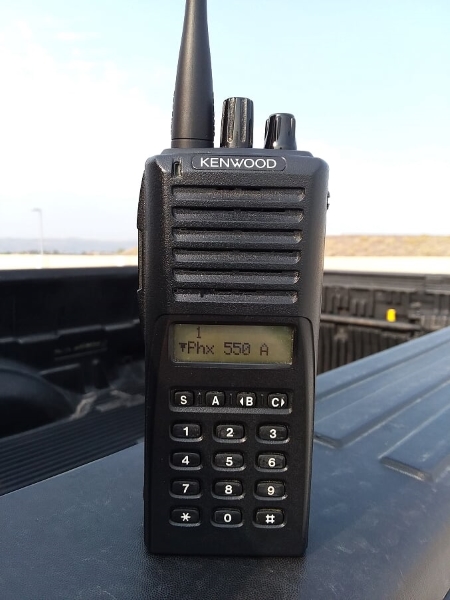
The TK-280/TK-380 is a handheld radio manufactured by Kenwood. It is available in VHF (TK-280) or UHF (TK-380) and can be used for trunked or conventional operation in both wide and narrow band. The TK-280 is available in two different models: Type 1 (146 — 174 MHz) and Type 2 (136 — 162 MHz). The TK-380 is available in three different models: Type 1 (450 — 490 MHz), Type 2 (470 — 512 MHz), and Type 3 (400 — 430 MHz). The TK-280/TK-380 allows for up to 32 systems and 600 channels to be programmed in a trunked configuration, and 250 channels to be programmed in a conventional configuration. Output power is 5W for the TK-280 and 4W for the TK-380. Low power is 1W on both the TK-280 and TK-380.
The TK-280/TK-380 can be programmed with Kenwood’s KPD-49D software and the KPG-36 programming cable. Some models will allow programming outside of these band limits; the programming software may signal a warning but the radio will be programmed with the desired frequency outside the model’s frequency range. Since this an undocumented and unsupported feature, radio performance may be affected. The TK-280 Type 1 (146 — 174 MHz) is reported to be able to operate on the 2m band, and the TK-380 Type 1 (450 — 490 MHz) is reported to be able to operate on the 70cm band.
The models with a DTMF keypad are not field-programmable.
Kenwood TK-380 Programming help, and questions.
Hello, I recently acquired three Kenwood TK-380 handsets from a friend of mine, and have a question about them. actually a few.
1.) How do I program them? I am looking to make one of them into a police scanner, of sorts, if this is possible. (As noted in the rules here, I am NOT looking for free software, or anything of that nature, I just don’t know where to start.)
2.) Are these still a viable handset? What can I use them for?
3.) Can these be HAM style radios? (I am not certified as of yet, but I intend to begin taking classes from the Portland, Oregon club in the upcoming weeks.)
4.) Do I need anything special to get these handsets talking to one another, or another radio?
I am gathering information right now, as Google frequently landed me here. If I am breaking any rules I am not aware of, please let me know. I am very new to this field and need all sorts of help.
Thanks in advance!
discombobulated
Member
Joined Nov 7, 2013 Messages 119
Hey and welcome to the forum.
First you will need a copy of KPG-49D which you may can find if you google hard enough.
Second you will need a programming cable. Either flavor of usb or serial.
You can pick whatever you like.
They most certainly are a wonderful and very durable radio. I have a couple of the TK-280 still working. I also use them for HAM use.
You can get started after you get the software and cable pretty easily just by entering some frequencies and programming it into the radio. You can do a talk around channel and can go miles with those.
You should use frequencies like:
151.625 Red Dot
154.570 Blue Dot
154.600 Green Dot
151.955 Purple DotThose are some business type talkaround frequencies anyone can use with 5 watt or less. You can also search MURS frequencies to find others you can use. But stick with those for now until you get more experienced.
Just put the frequency in the TX and RX and program and you would be good to go for a simple test if nothing else.
mmckenna
I ♥ Ø
Joined Jul 27, 2005 Messages 22,668 Location Hiding in a coffee shop.
You should use frequencies like:
151.625 Red Dot
154.570 Blue Dot
154.600 Green Dot
151.955 Purple DotThose are some business type talkaround frequencies anyone can use with 5 watt or less. You can also search MURS frequencies to find others you can use. But stick with those for now until you get more experienced.
Good idea, but the TK-380 is a UHF radio. Issue with that is that there are 3 different band splits in the UHF models:
Type 1: 450MHz — 490MHz (FCC ID: ALH24623110)
Type 2: 470MHz — 512-MHz (FCC ID: ALH24623120)
Type 3: 400MHz — 430MHz (FCC ID: ALH24623130)Which version you have will dictate where they can be used. The type 1 model will work in the GMRS range, which can be useful, but keep in mind that to be perfectly legal, you will need to get an FCC issued GMRS license. They even have FCC Part 95 compliance that makes them 100% legal (without question) on the GMRS band, if you get a license.
Type 2 is a «T» band model, and won’t be much good. Not sure if these can be taken out of band far enough to get them on GMRS. There are not any «no license» places in that band where you could legally use these.
The Type 3 is going to be more problematic. 400 — 430 is mostly federal government users, with (I think) a few pockets of commercial users in metropolitan areas. Again, if these can be taken out of band much, you -might- be able to get them into the 70cm amateur band.Since the 70CM amateur band runs from 430MHz to 450MHz, none of these will work natively in the amateur band.
Nice radios, they will do narrow band FM, so they are a viable radio for use on the commercial segments of the UHF band.
mmckenna
I ♥ Ø
Joined Jul 27, 2005 Messages 22,668 Location Hiding in a coffee shop.
If you are going to get your amateur license, you might be better off selling these 3 radios.
By the time you figure in the cost of the programming cable and the headaches associated with trying to get these onto the amateur bands, not to mention the headache of finding a DOS machine and programming a radio as a beginner, you would likely be better of purchasing one of the radios that are designed for the amateur bands. It’ll be easier for you to learn and will give you more flexibility, not to mention it’s much more likely that local amateurs will be able to help you out better if you have a radio that is designed for amateur use.Nothing at all wrong with using these on the 70cm amateur band if you can get them there, just that it can raise the frustration level pretty high, and that won’t be much fun. You won’t get a lot of money for these on the used market, but you’ll likely make enough to offset the cost of a new Yaesu, Kenwood or Icom 2 meter radio. Depending on where you are, the 2 meter VHF amateur band might have more people on it. Some locations the 70cm band can be pretty dead.
discombobulated
Member
Joined Nov 7, 2013 Messages 119
Thanks for that catch mmckenna, I was thinking about my vhf for some reason, haha.
Anyway, google FRS UHF frequencies and you should find some appropriate one you can try.
scannermanner1
Member
Joined Mar 14, 2014 Messages 453 Location In the Western US Mountains 🙂
I agree with the other guys 100 percent. it looks like they’re going off EBAY for 50 bucks each , so if you sell all three of them for that price than get like 20 more bucks you could buy a YAESU FT60r which is a dual-band UHF 70cm and VHF 2m ham radio. just a idea!
kayn1n32008
ØÆSØ
Joined Sep 20, 2008 Messages 6,412 Location Sector 001
The 450-490MHz version does the whole 440-450MHz ham band with out mod. The software will error that it is out of band, but will still allow the frequency to be programmed.
Sent from my iPad using Tapatalk
MTS2000des
5B2_BEE00 Czar
Joined Jul 12, 2008 Messages 4,845 Location Cobb County, GA Stadium Crime Zone
If you are going to get your amateur license, you might be better off selling these 3 radios.
By the time you figure in the cost of the programming cable and the headaches associated with trying to get these onto the amateur bands, not to mention the headache of finding a DOS machine and programming a radio as a beginner, you would likely be better of purchasing one of the radios that are designed for the amateur bands. It’ll be easier for you to learn and will give you more flexibility, not to mention it’s much more likely that local amateurs will be able to help you out better if you have a radio that is designed for amateur use.what headaches? The TK-280 and 380 (450-490) split, both V1 and V2 hardware versions) work just fine on the ham bands. No dickering, or retuning needed.
DOS machine? KPG-49D is the Windows based KPG for these radios and last release was in 2012, runs fine on XP/Win7 and even Win8.
Sure these are a generation or so back, but they are very capable radios, fully narrowband compliant (even the earlier V1 units) and they do LTR, fleetsync and 2-tone signaling.
a USB programming cable from Kawamall runs about $15. Software is available if you look for it.
These are better than any Chinese throw away radios anyday of the week.
mmckenna
I ♥ Ø
Joined Jul 27, 2005 Messages 22,668 Location Hiding in a coffee shop.
Well, thanks for your input there MTS….
Since I have never personally taken an x80 radio out of band, I’m not going to tell someone else that it’s easy. If you’ve done this, then great, carry on. Personally I’m not going to tell someone, especially a new amateur, that something is easy if I don’t know that for myself. Erring on the side of caution. I am glad to see that others have been able to give him advice in taking these radios out of band.
As for the KPG-49D, that’s great. Since I program radios as part of my job, I’m never going to recommend that someone use a bootleg copy of software. While we both know that Kenwood is pretty lax with their software, and most of it is out there on the web, I personally don’t chose to work that way. I’m not going recommend someone else take that route, but neither will I scold them for doing it. My own personal principals and part of me keeping my job is not breaking copyright rules. I have a budget that covers things like purchasing programming software and cables, so I’m not going to take a shortcut and risk getting a bad piece of bootleg software or a crappy aftermarket cable and potentially brick a radio. Neither will I tell someone else to do that. If they chose to do that on their own, fine by me.
Never at any point did I suggest these were not capable radios, in fact if you read what I wrote I specifically said: «Nice radios, they will do narrow band FM, so they are a viable radio for use on the commercial segments of the UHF band.»
I also would never, ever, suggest that someone purchase one of those Chinese radios. While I know people that have them and a few are mostly happy with them, I’ve never heard someone -not- complain about them in some way.
For less than $150 you can get a 2 meter Yaesu, Kenwood or Icom radio that won’t require finding software or programming cables. It’s already going to work in the proper segment of the band without any questions. The big benefit to a new amateur is that other hams will likely be able to help with programming and troubleshooting. I’ve helped out more than a few new amateurs, and nothing is more painful for them than not being able to figure out their new radio. Sometimes keeping your first step a small and easy one is a good way to get started. Jumping into the commercial radio field without any experience is no small step.
kayn1n32008
ØÆSØ
Joined Sep 20, 2008 Messages 6,412 Location Sector 001
Well, thanks for your input there MTS….
Since I have never personally taken an x80 radio out of band, I’m not going to tell someone else that it’s easy. If you’ve done this, then great, carry on. Personally I’m not going to tell someone, especially a new amateur, that something is easy if I don’t know that for myself. Erring on the side of caution. I am glad to see that others have been able to give him advice in taking these radios out of band.
As for the KPG-49D, that’s great. Since I program radios as part of my job, I’m never going to recommend that someone use a bootleg copy of software. While we both know that Kenwood is pretty lax with their software, and most of it is out there on the web, I personally don’t chose to work that way. I’m not going recommend someone else take that route, but neither will I scold them for doing it. My own personal principals and part of me keeping my job is not breaking copyright rules. I have a budget that covers things like purchasing programming software and cables, so I’m not going to take a shortcut and risk getting a bad piece of bootleg software or a crappy aftermarket cable and potentially brick a radio. Neither will I tell someone else to do that. If they chose to do that on their own, fine by me.
Never at any point did I suggest these were not capable radios, in fact if you read what I wrote I specifically said: «Nice radios, they will do narrow band FM, so they are a viable radio for use on the commercial segments of the UHF band.»
I also would never, ever, suggest that someone purchase one of those Chinese radios. While I know people that have them and a few are mostly happy with them, I’ve never heard someone -not- complain about them in some way.
For less than $150 you can get a 2 meter Yaesu, Kenwood or Icom radio that won’t require finding software or programming cables. It’s already going to work in the proper segment of the band without any questions. The big benefit to a new amateur is that other hams will likely be able to help with programming and troubleshooting. I’ve helped out more than a few new amateurs, and nothing is more painful for them than not being able to figure out their new radio. Sometimes keeping your first step a small and easy one is a good way to get started. Jumping into the commercial radio field without any experience is no small step.
Those are all good points.
As far as LMR radios they really are good beginner radios. The software is pretty easy to maneuver. The help files are pretty decent as well and there are enough TK-x80 user here there is lots of knowledge to be shared. Software is easier to maneuver than both Motorola, and Icom, and about as difficult as new-ish(VX-231, VX-92x) vertex radios.
The other good thing is that chargers, batteries and audio accessories are cheap and plentiful.
Sent from my iPad using Tapatalk
The Radio Information Board
I have a TK380, Ver. 2 W/DTMF pad. Is it field programmable (or can be modified to be) and if it is, does anybody have the instructions to do so and be willing to share with me? — I can trade ( pdf. file) the field programmming instuctions for a TK 3140 if needed.
Thanks!
BHjsikora Posts: 99 Joined: Thu May 12, 2005 12:51 pm
tk380
Post by jsikora » Mon Jun 05, 2006 2:40 pm
Did this ever get answered. I was told it was able to be done. I programmed it via software to do it, but still can’t get it to work. Is there a diode that needs removed as in other series ?
BTW, mine is a TK280 (VHF Model)
azFIREguy Posts: 77 Joined: Thu Jul 01, 2004 1:43 pm Location: AZ
Post by azFIREguy » Sun Sep 17, 2006 7:37 pm
Yes the tk-280, and tk-380 are able to be feild programmed. You don’t even have to use the DTMF key pad for programming. There is a resistor that has to be removed in order to field program this radio plus it must be enabled in the software. I will try to get some pic’s on here of what diode must be removed to acomplish this.
***UPDATE***
I was unable to get a good picture of this. However you must open up the radio. On the the backside of the second board there is is a resistor that says [R144] this must be removed. You can use a pair of tweezers for this. Put the radio back together. Now enable the self program in the software.
Once you have completed the modification push and hold the botton below the PTT while turning on the radio. The screen will then say SELF PROG At this point if you would like to change any on the botton functions push the botton below the PTT again. Then use the B or C botton to select the botton to be changed. Once you get to the botton you want changed use the channel select knob to scroll though the options. Then push the B botton to accept the change.
To change the frequency get back to the SELF PROG agian and then push the botton above the PTT. Then push the C botton to select the group and channel to be changed. Then push the B botton to enter the frequency information. Then scroll though to the information you want to change. Once you are done changing your infomation simply turn off the radio and turn it back on.
***NOTE***
YOU WILL NOT BE ABLE TO CHANGE OR IN PUT CHANNEL NAME WITH THIS FEILD PROGRAM METHOD. ONLY THE SOFTWARE CAN BE USED FOR THIS.
I will not take any responsablity for any damage to your radio if you mess it up. I have done this mod to all of my tk-280’s and tk-380’s with and without the DTMF keypad on the radio.
I hope this helps you out with your question