4 объявления о продаже Suzuki GSX-R 1000
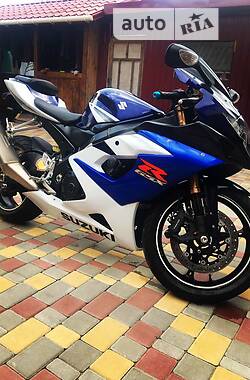
2005год К6 1000куб купувався новим рідний пробіг все в оригіналі Скло рідне прозоре теж є весь пластик рідний нічого не фарбувалося два ключі з документами порядок. .
1700473170.048
Sat Nov 11 2023 13:46:08 GMT+0200 (Eastern European Standard Time)

I поколение (FL) • MT (165 к.с.) • Base
4 000 $ • 151 000 грн
- 30 тыс. км
- Львов ( от )
- Бензин, 1000 см³
- Не указано
Мотоцикл был растаможен из Швейцарии. На ходу. Необходимо заменить колодки и покрышки. Больше информации по телефону. Документы чистые. Относится, снимается. .
1700473170.048
Fri Oct 27 2023 21:03:26 GMT+0300 (Eastern European Summer Time)

8 000 $ • 303 440 грн
- 10 тыс. км
- Киев ( от )
- Бензин
- Ручная / Механика
Писать по Telegram (IIIBBBB) Viber, WhatsApp. Мотоцикл стоит на украинском учете на мне, Обслуженный, в хорошем состоянии, сел и уехал! Мотоцикл сейчас за.кор.дон.ом, приеду переоформлю без проблем. При необходимости пришлю еще фото, видео зарядка для телефона и держатель 12в. красивая подсветка включается с кнопки , .
1700473170.048
Thu Oct 26 2023 14:28:07 GMT+0300 (Eastern European Summer Time)
Перевірений VIN-код AUTO.RIA проверил VIN-код и сравнил информацию от продавца с данными реестров МВД. Проверить всю историю авто 0

II поколение (FL) • MT (201 к.с.) • Base
8 500 $ • 322 745 грн
- 35 тыс. км
- Одесса ( от )
- Бензин, 1000 см³
- Не указано
JS1CY111100109447 AUTO.RIA проверил VIN-код и сравнил информацию от продавца с данными реестров МВД. Проверить всю историю авто
Продам Suzuki gsx r1000, в хорошем состоянии, пробег 35тыс, с официальными документами сервисная книжка, есть все ключи, стоит прямоток, шланги тормозные армированные, резина в хорошем состоянии, свечи, колодки все растительное заменены, в комплекте есть седло, нож, шланги, проверка на любом сто, продажа только с переоформлением .
1700473170.048
Модели Suzuki
С Suzuki GSX-R 1000 также ищут
- Suzuki GSX-R 600
- Suzuki GSX-R 750
- Honda CBR 1000RR
- Honda CBR 954RR
- Suzuki GSX-S 1000
- BMW S 1000RR
- BMW 3 Series
- BMW 5 Series
- Suzuki GSX 1300R Hayabusa
- Honda CBR 600RR
Другие сервисы
- Проверка авто
- Технические характеристики Suzuki GSX-R 1000
- Автосалоны Suzuki
- Новые Suzuki
- Запчасти Suzuki GSX-R 1000
- Suzuki GSX-R 1000 после ДТП
- Suzuki GSX-R 1000 из-за рубежа
- Фото Suzuki GSX-R 1000
- Отзывы о Suzuki GSX-R 1000
- Новости Suzuki GSX-R 1000
- Средняя цена на Suzuki GSX-R 1000
- Все марки машин
- Suzuki GSX-R 1000 на выплату
- Пригон авто
Запчасти на Cузуки ГСХ-Р 1000 10 000+ запчастей Suzuki
- Детали двигателя
- АКПП и КПП
- Детали кузова
- Ходовая часть / подвеска
- Зеркала
- Ремни
- Сцепление
- Фильтры
- Система охлаждения
- Рулевое управление
- Кондиционер, обогреватель, вентиляция
- Топливная система
- Тормозная система
- Электрооборудование
- Система очистки окон и фар
- Автостекла
- Система зажигания/пуска
- Запчасти для ТО
- Детали салона
- Двери
- Колеса и шины
- Дополнительное оборудование
- Датчики
- Автосвет
- Еще 16 запчасти
- Скрыть
Авто под заказ Смотреть авто под заказ
AUTO.RIA
в вашем смартфоне Все для покупки и продажи авто в приложении AUTO.RIA

Присоединяйтесь к сообществу автолюбителей AUTO.RIA

- Безопасные сделки
- Соглашение о предоставлении услуг
- Помощь по сайту AUTO.RIA.com
- Политика приватности
- Вакансии AUTO.RIA
© 2014-2023 RIA.com
Режим «Частный доступ»
Внимание! Вы используете режим «Частный доступ» .
Отключите режим приватного доступа, чтоб воспользоваться поиском б/у авто.
Как отключить?
AUTO.RIA безопасен для вас
Мы используем cookie-файлы. Ознакомиться с Политикой использования файлов cookies
Понимаю и разрешаю Настроить
Настройки файлов cookies
Мы (ARS ONLINE OÜ) используем cookie-файлы (cookies), обязательные для работы нашего сайта и сервисов, на основании легитимного интереса. Также, мы хотели бы с вашего согласия установить на вашем устройстве опциональные аналитические cookies для запоминания данных о просмотрах и пользовании сервисами, а также маркетинговые cookies, которые помогут нам понять, какие сервисы и продукты наиболее интересуют пользователей.
Включая эти cookies, вы способствуете улучшению наших сервисов и продуктов. Детальнее о cookies читайте в нашей «Политике использования файлов cookies». Обязательные cookies мы устанавливаем в любом случае. Ниже можно позволить или не позволить нам установку опциональных cookies».
Fiche moto Suzuki GSX-R 1000 2020 Tordre la poignée. en permanence

Si elle n’a plus la suprématie d’autrefois, la GSX-R 1000 s’affiche quand même comme une sacrée bonne hypersport. Son moteur de barjot est une barre de dynamite sous pression d’adrénaline. Et sa sportivité parvient à conserver le brin de polyvalence routière qui a fait la réputation de la lignée.
Un filet de temps est passé depuis sa nouvelle mouture. Pas assez pour une évolution mais suffisamment pour apporter quelques modifs. Et surtout réparer une gageure : cette pistarde n’était pas équipée de shifter. C’était la seule de la catégorie. Le mal est réparé avec 2019. Le Quickshifter de la version R, fonctionnant à la montée comme à la descente des rapports, est installée sur cette Gex. Autre amélioration, visuelle cette fois, la pose d’un revêtement noir et d’une platine effilée sur le pot d’échappement. Il est toujours aussi gros, mais le parait un peu moins avec ces astuces.
Pas plus d’arrangements au programme, sauf pour la GSX-R 1000 R, un poil revue elle aussi. Ah si, les pneus. Les Bridgestone RS10 passent le relais aux RS11. La Suzuki GSX-R 1000 de nouvelle génération, c’est surtout ça : Fin 2015, la marque annonçait les grandes lignes de cette sportive avec la GSX-R Concept ; une démonstration très proche de l‘interprétation définitive. Effectivement, on note très peu de différences avec la version de série. Design identique, idem pour la force technique, menace évidente, ce teaser laissait entrevoir du gros potentiel.
Les Gex 1000 ont rarement fait dans le spectaculaire coté design ; sauf peut-être la K5-K6, avec ses ouïes d’admission d’air forcé mises en évidence. Celle-ci ne déroge pas à la règle, avec des lignes tendues mais sages, une fausse face d’Hayabusa avec des feux à LEDs, des clignos quittant les rétros, une ligne toute en vitesse seulement saccagée par un pot ‘égronorme’ et le support de plaque législativement obligatoire. Les japonaises ont laissé aux italiennes le soin d’exprimer la grâce. Ici, on pense performance avant tout, et la GSX-R 1000 sait qu’elle doit convaincre à nouveau, plus fortement que jamais.


La première étape d’un chemin long à rattraper, c’est de trouver des chevaux. Psychologiquement, et peut-être plus que dans n’importe quelle autre catégorie, le pistard veut un missile avec de gros watts. En attendant le prochain palier, la norme s’est stabilisée à 200 chevaux. Suzuki veut marquer le coup. N’attendons pas la fin des lignes pour apprendre qu’une GSX-R 1000 sort maintenant 202 chevaux. Un sacré progrès ! Le bloc 4 cylindres a gagné 17 ch, avec une relative sanction. La puissance maxi est perchée bien plus haut, à 13 500 trs au lieu de 11 500 trs. Même punition pour le couple, en légère hausse avec 12 mkg mais 800 trs supplémentaires pour saisir son maxi. Suz a toujours su offrir des moteurs débordants de vigueur pour ses modèles de fort calibre, et cette Gex a de quoi donner des sueurs aux autres blocs de la catégorie. Cependant, ce moteur n’est pas que plus puissant. Il a d’autres atouts. Suzuki s’est sérieusement penché sur lui. Avec une solution technologique rare en moto : le calage variable de la distribution. Ainsi, l’arbre à cames d’admission présente un profil différent suivant le régime. Comment ? Par un petit système très ingénieux empruntée à la GSX-RR de MotoGP. Une cloche spéciale fixée sur l’ACT contient 12 billes circulant dans des rainures obliques. Avec la force centrifuge, ses billes sont poussées vers le bord de la cloche et décale ainsi les cames. Le VVT (Variable valve timing system) préserve ainsi de la force à bas et moyen régimes puis dope la puissance à haut régime. Pour gagner du poids, les arbres à cames sont creux. Et pour éviter l’affolement des soupapes dans les tours, celles-ci ne sont plus actionnées par des poussoirs mais par des linguets.

Ces innovations ne sont qu’une partie des spécificités de ce 4 cylindres. Doté de nouvelles cotes internes, 76 x 55.1 mm au lieu de 74.5 x 57.3 mm, il enregistre une cylindrée un chouia augmentée (999.1 -> 999.8 cm3), un taux de compression revu à la hausse (12.9 -> 13.2 : 1), 1000 trs de régime supplémentaire (14 500 tr/mn), ainsi que de nouvelles bielles, pistons et segments. Et la puissance n’est pas sa seule priorité, il veut aussi participer à l’équilibre général. Il est 22.2 mm plus court, 6.6 mm moins large, et redressé de 6°. Pour une GSX-R, le chapitre technique a une saveur toute particulière. Chaque petite amélioration permettant de grappiller le petit millième qui manque. Par exemple, on trouve de nouveaux injecteurs à 10 trous. Une première rangée placée sous les papillons fonctionne en permanence, et la seconde placée dans la boite à air n’envoie la sauce qu’à haut régime. Tiens, cette boite à air, elle a son mot à dire aussi. On trouve des conduits simples au centre pour les cylindres 2 et 3, et un système variable pour les 1 et 4. Ces conduits à deux étages sont activés en fonction du régime. L’air prend le chemin le plus long à bas et mi-régimes pour favoriser le couple ; au-dessus, l’air s’engouffre par le haut et par le bas des conduits pour favoriser la puissance. Avec cette répartition de l’admission d’air, Suzuki entend lisser tant qu’élargir la puissance exploitable. Le diamètre d’admission en profite pour augmenter passant de 44 à 46 mm. Du coté de l’échappement aussi, le souffle est contrôlé. En plus de la traditionnelle valve précédant le silencieux, la GSX-R implante des vannes dans les tubes de jonction reliant les tubulures des cylindres 1-4 et 2-3. Ceci afin d’équilibrer les contre-pressions des gaz.
Quelques petites précisions avant un autre chapitre, plus numérique. La commande d’embrayage est plus souple avec le nouvel embrayage anti-dribble, la chaine de transmission adopte un pas de 525 (530 auparavant), l’efficacité du refroidissement est augmenté tout en embarquant 400 ml de moins + un radiateur d’huile modifié. Avec son 4 cylindres plus puissant, plus compact, plus avide de tours, la 1000 GSX-R s’aligne de front avec le plus fort de la meute. Chaque phare en embuscade, chaque main démangée par la performance s’attend maintenant à la réponse de Suzuki concernant l’électronique embarquée. Comme Honda avec sa CBR 1000 RR, Suz a longtemps attendu pour intégrer les dernières technologies d’assistances au pilotage. On avait bien droit à plusieurs cartographies avec le S-DMS, et à l’ABS. Mais il faut beaucoup plus à présent pour se vendre. Une hypersport de 200 bourrins sans contrôle de traction aujourd’hui, c’est une hérésie. Alors, à Hamamatsu, on a fait le marché aux puces et rempli le caddy. Sauf que.
D’abord caser une IMU. La centrale inertielle de Bosch est un élément tactique depuis peu, mais sacrement intéressant. Elle permet de suivre les mouvements de la moto dans 6 directions et sur 3 axes, roulis, tangage et lacet. Et ainsi de transmettre des infos dynamiques permettant à l’électronique d’améliorer son efficacité en fonction des mouvements de la moto et de sa position dans l’espace.
Maintenant, installer un contrôle de traction. Le TCS de Suzuki calcule la rotation des roues toutes les 4 millisecondes puis intervient en fonction des écarts et du réglage choisi. Il y a 10 positions sur la grosse Gex, avec cette graduation : de 1 à 4, c’est plutôt pour la piste ; 5 à 8, quand on se promène vite sur la route ; et on se garde les 9 et 10 quand la météo ou la chaussée sont maussades.
Le S-DMS est toujours là, proposant trois cartographies d’injection. Chacune dispose du maximum de puissance mais la distribue différemment. Le mode A est le plus direct, le B tempère un peu les ardeurs jusqu’à mi-régime, le C calme la puissance sur les deux premiers tiers de la courbe. Pour le quotidien, on a droit aux deux facilités implantées un peu partout dans la gamme, le Low RPM Assist et le Easy Start. Le premier ajuste le régime pour éviter de caler lorsqu’on s’élance ou à faible vitesse ; le second s’occupe du démarrage après l’impulsion sur le bouton rouge. Euh. Ce genre de goodies a-t-il vraiment sa place sur une moto nécessitant une forte expérience ?
Par contre, petite révolution chez Suz : au point mort, plus besoin de serrer la poignée d’embrayage lorsque l’on veut démarrer.


En découvrant la GSX-R 1000 Concept, on s’attendait à quelque chose de sérieusement costaud coté châssis, avec comme apéro la belle fourche inversée à cartouches déportées. Problème, cette Showa BFF réserve son efficacité pour la version R.
On râle ? Pas tant. Du gros boulot a été fait sur la partie-cycle afin de doper la GSX-R 1000. Le cadre en aluminium prend des dimensions plus compactes, et gagne 10% en poids. Le nouveau bras oscillant est annoncé plus rigide, avec un axe de pivot déplacé de 20 mm vers l’avant. Pour le bâti arrière, une conception repensée permet de gagner encore 1 kilo.
Les suspensions, déjà éprouvées sur la génération précédente et d’un excellent niveau, sont reconduites sur la nouvelle Gex. La fourche inversée de 43 mm est un modèle BPF à gros piston de chez Showa. L’amortisseur arrière provient du même équipementier, et bénéficie d’une nouvelle tringlerie pour être plus réactif. En montant à bord, mais surtout pendant les phases de pilotage, les pilotes aguerris apprécieront les efforts coté ergonomique. Des petites choses, mais qui savent s’apprécier. Le réservoir, moins haut de 21 mm, a été remodelé pour faciliter les déplacements du corps. Visez, bougez, anglez ! C’est toujours plus sympa quand on est à l’aise et qu’on pivote plus naturellement. Ouvrez grand les gaz, laissez un temps le compteur s’affoler puis choper les freins. Son efficacité augmente d’un cran. Les disques passent de 310 à 320 mm, et sont fixés sur les frettes par un duo de raccords, mi classique mi T-drive. Les étriers sont toujours signés Brembo. A fixation radiale, contenant 4 pistons de 32 mm. L’ABS est de série, et grâce à la centrale inertielle, il est aussi actif en virage. Le Track Motion réduit la pression quand la moto est sur l’angle, et agit également sur le soulèvement de la roue arrière lors des gros freinages. Nouvelle Gex, nouveau tableau de bord. Plus de compte-tours à aiguille, plus de tige rouge qui gigote avec hystérie. Désormais, une tablette alphanumérique regroupe toutes les infos. Pas très gai, pas de couleur mis à part un peu de rouge perdu en bout de régime. On est loin de l’accueil d’une R1, d’une RSV4-RR ou d’une Panigale. Pourtant, toutes les infos sont là, avec en priorité le régime, la vitesse, le rapport engagé, la carte S-DMS choisie et le niveau de Traction Control. Et depuis le cockpit précédent, on a gagné l’affichage du niveau de carburant, le calcul de la conso, la température ambiante, un indicateur de maintenance et un témoin de givre.
Avec cette version, la Suzuki GSX-R 1000 a fait le plein de puissance et l’essentiel d’assistances électroniques. Il lui en manque quelques unes pour être aussi bien équipée que les copines mais il y a déjà de quoi faire – Choix de cartographies, contrôle de traction, ABS cornering, contrôle du levage de la roue arrière, shifter Up&Down. Comme annoncé, cette Gex est la plus puissante jamais produite. Et bénéficie d’un super rapport poids/puissance. Il y clairement de quoi continuer la moisson de trophée. Mais on dirait qu’elle a laissé le soin à sa sœur GSX-R 1000 R de s’emparer du circuit et du cœur des pistards chevronnés. Pour elle, sa mission se contentera d’être la plus efficace partout ailleurs. M.B — Photos constructeur
2022 GSX-R1000R
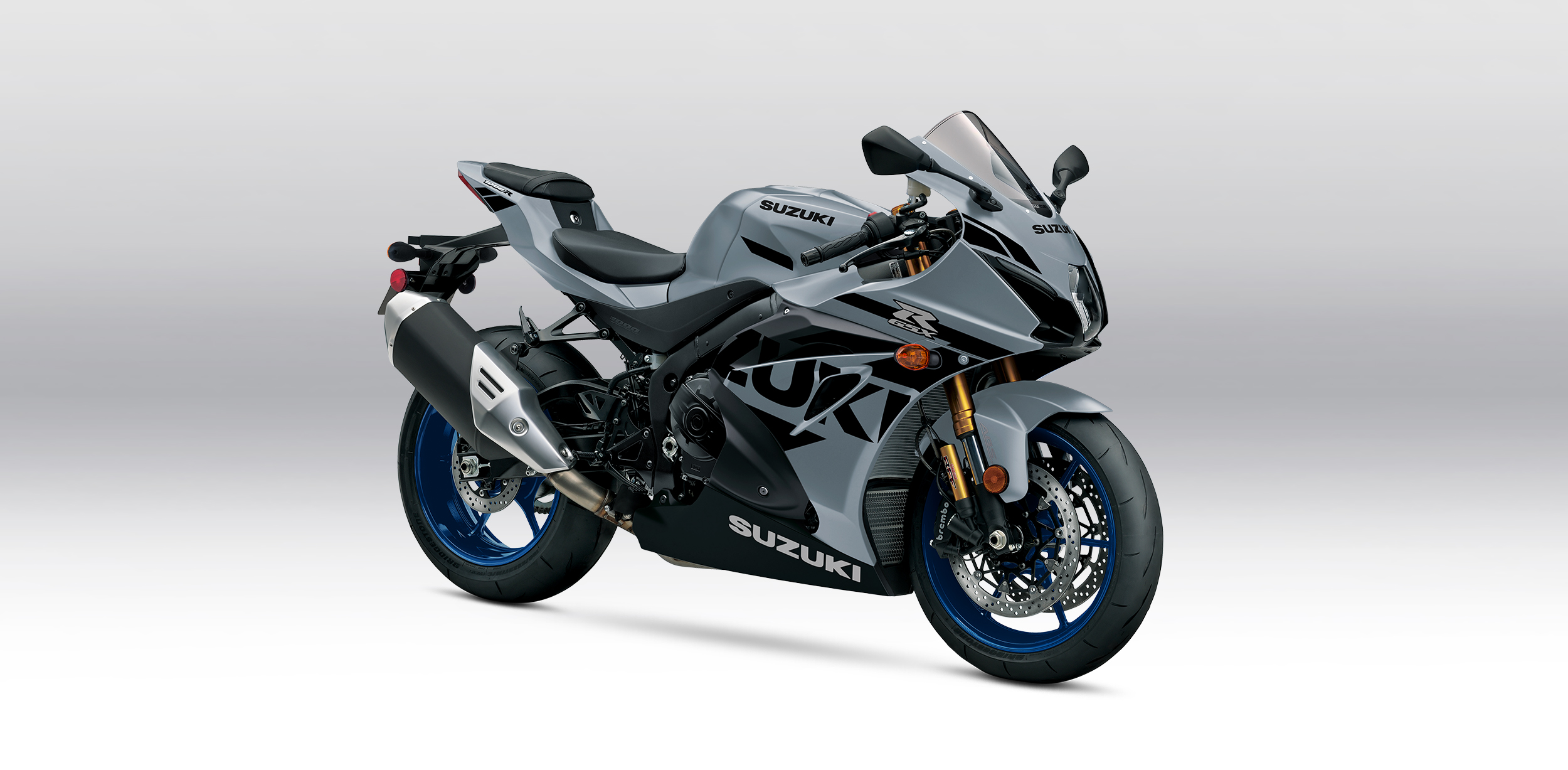
In 1985, Suzuki revolutionized the sportbike category with the introduction of the original GSX-R750, and then created another milestone in 2001 with the introduction of the GSX-R1000. Using the lithe chassis of the GSX-R750 and a 988cc inline four-cylinder engine design that Suzuki is renowned for, Superbike performance became available to riders everywhere.
At the pinnacle of the GSX-R family of ultra-high-performance motorcycles, the 2022 GSX-R1000R’s versatile engine provides class-leading power that is delivered smoothly and controllably across a broad rpm range.
[ Read More about 2022 GSX-R1000R ]
Gallery
There was an error loading these images. please try again later!
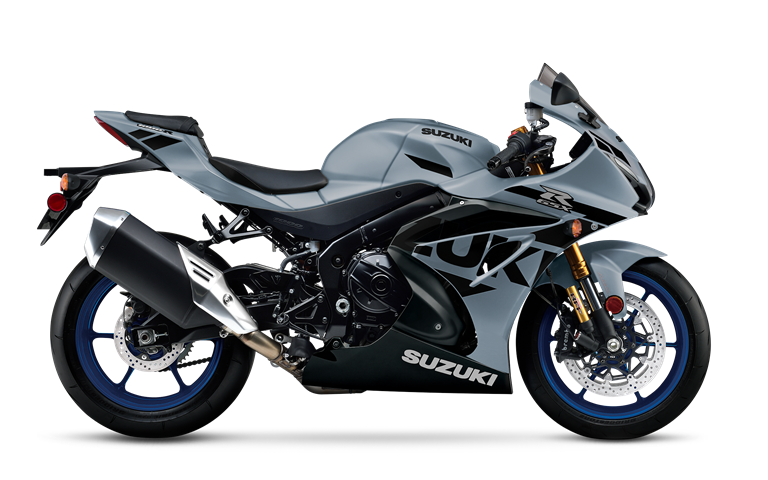
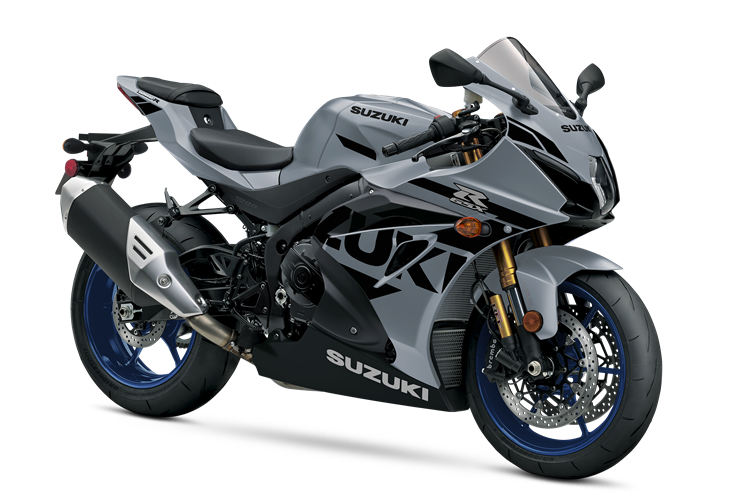
- Metallic Matte Black No. 2 / Glass Matte Mechanical Gray
- Metallic Matte Black No. 2
Features
Key Features
Available in a new Metallic Matte Black and Glass Matte Mechanical Gray with contrasting graphics and bright, metallic blue wheels or Metallic Matte Black with white, silver, and orange graphics.
DOHC, inline-four engine produces great top-end power with a strong low- to mid-range pull thanks to the exclusive Suzuki Variable Valve Timing (VVT) system and the highly efficient 4-2-1 exhaust with a revised muffler and heat shield.
Advanced electronics include an IMU, adjustable traction control, the Suzuki Bi-Directional Quick Shift System, and Suzuki Drive Mode Selector, plus the GSX-R1000R–specific Motion Track Anti-lock Brake** and Launch Control Systems to increase street and track-day performance.
The GSX-R1000R’s twin-spar aluminum frame is lighter and more compact than the prior-generation GSX-R1000. The frame’s adjustable swingarm pivots to help racers tune the chassis for extraordinary racetrack performance.
Advanced Showa Balance Free Front Fork (BFF) and rear suspension deliver extraordinary handling while the ABS-equipped, Brembo four-piston, radial-mount front brake calipers are fed by new, stainless steel brake line calipers for precise stopping performance.
The GSX-R1000R–specific, black background LCD multifunction instrument panel was inspired by the GSX-RR MotoGP dash. The unique GSX-R1000R logo on the tail alerts others that this motorcycle is something extraordinary.
Aerodynamic fairing houses a bright LED headlight with eyebrow position lights above the Suzuki Ram Air Direct ducts that feed the engine’s electronic throttle bodies to boost top-end power.
**Depending on road surface conditions, such as wet, loose, or uneven roads, braking distance for an ABS-equipped vehicle may be longer than for a vehicle not equipped with ABS. ABS cannot prevent wheel skidding caused by braking while cornering. Please ride carefully and do not overly rely on ABS.
Engine Features
The compact, liquid-cooled, DOHC, 999.8cc, inline-four-cylinder engine is designed with a high level of top-end performance plus strong low- to mid-range power.
The crankshaft retains Suzuki’s Even Firing Order Engine legacy. Uneven firing order engines used in other motorcycles vibrate more, while the GSX-R1000R makes good, smooth, and reliable power at all engine speeds while emitting a screamer exhaust note.
The short-stroke engine has a 76.0mm bore versus a 55.1mm stroke yet is narrower than the prior generation GSX-R1000 thanks to effective design.
The engine has been rotated back and positioned in the frame to create optimal chassis dimensions for precise handling and to balance the motorcycle’s weight.
The exclusive Suzuki Racing Variable Valve Timing System (SR-VVT) uses a centrifugal actuated mechanism on the intake camshaft sprocket to increase high engine rpm power without losing low- to mid-range power.
The Suzuki Racing Finger Follower valve train weighs less than a tappet-style valve train for reduced friction and increased valve response at higher engine speeds.
Titanium valves, two 31.5mm intake, and two 24mm exhaust valves are used for each cylinder. The lighter valves respond well to the finger follower’s arms and permit a 14,500 rpm redline that helps produce very high peak horsepower.
Aluminum pistons, 76.0mm in diameter, were engineered with use of Finite Element Method (FEM) analysis and are cast for optimal rigidity and weight.
Suzuki Composite Electrochemical Material (SCEM)–coated cylinders are integrated into the upper crankcase to reduce friction and improve heat transfer and durability.
The high 13.2:1 compression ratio helps produce high horsepower. The cylinder head’s shallow combustion chamber minimizes heat produced during operation.
The EFI system uses Suzuki’s Ride-by-Wire Electronic Throttle Bodies, where the throttle valves are controlled by a servo motor for fast response to rider throttle grip input while delivering precise and smooth power.
The automatic Idle Speed Control (ISC) improves cold starting and stabilizes the engine idle regardless of engine temperature.
Complementing the four primary fuel injectors in the throttle bodies are four Suzuki Top Feed Injectors (S-TFI) that spray fuel from the top of the airbox directly into the intake funnels. This results in higher peak power, more efficient combustion, and a higher level of fueling control.
To increase top-end power without losing lower rpm performance, the airbox is equipped with stacked air intake funnels for the two outer cylinders. This simple design allows good air flow at all intake speeds without requiring a mechanism that adds weight or complexity.
Dual Suzuki Ram Air Direct (SRAD) intake ducts are used to exponentially increase the volumetric flow of air amount coming in the airbox as road speed increases.
The digital ignition fires iridium-type spark plugs that increase spark strength and combustion efficiency. These quality components also last longer than conventional spark plugs.
The 4-2-1 exhaust system is designed to help the engine deliver a wide range of performance with an exciting rush up to redline. The black finish titanium muffler, with brushed stainless-steel heat shield, is tucked up high for good clearance at high lean angles while creating an exciting, distinctive sound.
The Suzuki Exhaust Tuning (SET) system valve in the mid-pipe helps control back-pressure and flow to the muffler to widen power delivery and reduce exhaust sounds without needing a larger silencer.
SET-Alpha exhaust valves are in the balance tubes between the two outer and two inner head pipes. Actuated by a cable from the main SET-valve, the Alpha valves open at higher engine speeds and close at lower rpm to help the engine create high peak power without losing low- and mid-range horsepower.
The cooling system was designed using advanced analysis design so the coolant flows through the engine and radiator more efficiently. This design uses 400cc less coolant than the prior-generation GSX-R1000 but has better cooling efficiency while being more compact and lighter.
The fairing lowers efficiently guide cooling air to the high-capacity curved radiator. Twin cooling fans ensure good cooling at lower road speeds.
Additional heat is removed from the engine via the use of an air-cooled, radiator-style oil cooler mounted directly below the main radiator.
Transmission Features
The Suzuki Bi-Directional Quick Shift System permits clutchless upshifts and downshifts for faster lap-times during competition and exceptional rider convenience on the street.
The cassette-style, six-speed transmission lets riders precisely match the gear ratio to the riding condition. A cassette-style transmission can be easily removed from the crankcase as an assembly with the engine still in the frame, facilitating racetrack gear changes and simplified service.
Based on Suzuki’s race-proven close-ratio transmissions, the GSX-R1000R gear box features vertically staggered shafts to reduce overall engine length.
The primary gear ratio is lower compared to the prior-generation GSX-R1000 for stronger acceleration.
The shift linkage can be easily set up for reverse pattern, GP-style shifting (even with the quick-shifter in use).
A programmable shift light is on the main panel to provide a visual alert to the rider to shift when a certain engine rpm is reached.
The GSX-R1000R is equipped with the Suzuki Clutch Assist System (SCAS) multi-plate, wet clutch. SCAS works like a slipper clutch during downshifts while increasing pressure on the plates during acceleration. This smooths engine braking and lightens the clutch lever pull.
To reduce moving mass, a 525-size drive chain is used with a 45/17 final sprocket ratio that complement the large rear tire dimensions.
Advanced Electronics Feature
Lightning-fast, 32-bit dual processor Engine Control Module (ECM) blends Suzuki’s vast street-going EFI knowledge with the intelligence from Suzuki’s race-winning MotoGP program. GSX-R1000R riders will get sportbike performance without peer while simultaneously receiving polished street manners.
Using MotoGP knowledge, Suzuki has fitted an Inertial Measurement Unit (IMU) on the GSX-R1000R. The IMU provides six-direction, three-axis, motion and position information to the ECM so instantaneous adjustments can be made electronically to the engine and chassis components that influence performance.
The LCD multifunction instrument panel was inspired by the GSX-RR MotoGP dash. This panel is laid out so the rider can easily see the tachometer bar, speedometer digits, and other essential operational information. This effective display is critical, as it is the rider’s interface to the GSX-R1000R’s advanced electronics. The panel on the GSX-R1000R is unique, as it features a black background.
The Ride-by-Wire electronic throttle bodies are precisely opened by the ECM to match the throttle grip rotation of the rider’s hand and the refinement from the IMU-influenced electronics. The result is a strong, seamless engine power delivery from idle to redline.
The three-mode Suzuki Drive Mode Selector (S-DMS) system lets the rider select the engine’s power delivery characteristic to match riding ability and conditions.
The exclusive 10-mode Motion Track Traction Control System (MT-TCS)*, with IMU influence, increases rider confidence by allowing adjustments to the amount of intervention to match riding ability and surface conditions.
Exclusive to Suzuki, the Motion Track Anti-lock Brake System (ABS)** brings additional control to anti-lock braking. Like a conventional ABS system, the Motion Track Brake System provides the appropriate amount of braking force for the available traction. When the IMU detects the rear wheel lifting from extreme braking forces, the ABS control module will adjust the front brake pressure to reduce the rear wheel lift. If the IMU senses the motorcycle is leaned over when the brakes are used, the ABS unit will adjust the brake pressure to an optimal amount to help maintain braking force and tire grip.
The Suzuki Easy Start System simplifies startup for the GSX-R1000R rider as the ECM automatically cranks the engine for 1.5 seconds (or until it starts) with a momentary press of the starter button. There is no need to pull in the clutch lever if the transmission is in neutral. Once started, the ECM will control the electronic throttle bodies to maintain a consistent engine idle speed, whether the engine is cold or warm.
The innovative Suzuki Low RPM Assist System smooths takeoffs and reduces the chance of the rider stalling the motorcycle. If necessary, the ECM raises engine rpm slightly for a smoother start when the clutch is released so it’s easier to ride away from a stop or navigate at very low speeds in traffic.
The Suzuki Launch Control System provides GSX-R1000R riders a competitive advantage when launching their motorcycle at the start of the race. This system will modulate power so the rider can concentrate on clutch operation.
The Suzuki Bi-Directional Quick Shift System lets GSX-R1000R racers shift faster than ever before. By ignition timing manipulation on upshifts and electronic throttle body manipulation on downshifts, clutchless shifting helps deliver faster and more consistent lap times.
*The Traction Control System is not a substitute for the rider’s throttle control. It cannot prevent loss of traction due to excessive speed when the rider enters a turn and/or applies the brakes. Neither can it prevent the front wheel from losing grip.
**Depending on road surface conditions, such as wet, loose, or uneven roads, braking distance for an ABS-equipped vehicle may be longer than for a vehicle not equipped with ABS. ABS cannot prevent wheel skidding caused by braking while cornering. Please ride carefully and do not overly rely on ABS.
Chassis Features
Using lessons learning from Suzuki MotoGP chassis development, the engine angle of the GSX-R1000R was rotated backward six degrees as compared to the prior-generation GSX-R1000. This had the joint effect of reducing the distance of the fork to the center of the chassis by 20 mm and increasing the swingarm length by 40 mm. This increases chassis stability and improves aerodynamics.
The aluminum twin-spar-style frame was designed using FEM analysis technology to place strength in the proper places; the new frame is also 10 percent lighter than the prior-generation GSX-R1000. The spars of the frame are set 20 mm closer to help improve aerodynamics and looks and to bring more comfort to the rider.
The aluminum Superbike-braced swingarm has equalized bracing to the main beams to provide balanced support and movement to the shock absorber, improving racetrack handling while conveying a consistent suspension feel to the rider.
The GSX-R1000R’s swingarm pivot features an adjustable location so the chassis can be better tuned for competition use (please use the standard position for street riding).
The GSX-R1000R’s fork and shock absorber body have a gold anodized finish like the suspension components on the Team Suzuki ECSTAR GSX-RR race bike.
Racetrack-developed links connect the single Showa Balance Free Rear Cushion Light (BFRC-lite) shock to the braced swingarm. The BFRC-lite’s innovative design controls damping force outside of the shock body to not only control how the suspension strokes but helps smooth reaction over bumpy surfaces or when the chassis is pitched during braking. This produces a superb level of response in a racetrack environment and sets a new standard for rider feedback and comfort during street riding.
The Showa Balance Free Front Fork (BFF) uses race-level technology to bring excellent damping force responsiveness not seen in a SuperSport motorcycle before. This suspension’s design controls damping force outside of the spring chamber, so the fork precisely maintains consistent damping regardless of its stroking action. With the BFF the rider enjoys an unparalleled level of surface feedback and ride compliance.
The GSX-R1000R is also fitted with a lightweight, race-ready upper triple clamp in conjunction with the BFF fork.
Brembo Radial Mount Brake Calipers provide the rider with strong braking performance combined with superb feel as well as up front, stainless steel brake lines to improve feel and brake response.
Brembo T-drive Brake Rotors feature two methods of attaching the 320mm floating disc to the carrier. There are five conventional floating rotor spools that maintain the rotor’s relationship to the caliper, and there are five new-design T-drive fasteners that enable the rotor to absorb more braking energy than a disc with conventional spools alone. As a result of the larger-diameter discs, and the energy they can absorb, the GSX-R1000R has more braking force available to the rider than ever before.
The front brakes are complemented by a 240mm rear disc brake with a Nissin single-piston caliper to help make sure the rider can have controlled stops.
Like conventional ABS, the Motion Track Brake System provides the appropriate amount of braking force for the available traction, with additional chassis pitch input from the IMU. When the IMU detects the rear wheel lifting from extreme braking forces, or the motorcycle is leaned over, the ABS system will adjust the front brake to help settle the chassis and maintain braking efficiency.
Unique to Suzuki, the lightweight six-spoke wheels reduce unsprung mass and have been designed to handle the braking and drive forces that a GSX-R1000R can create.
The GSX-R1000R comes with track-day-ready Bridgestone Racing Street RS11 low-mass tires. The tires’ tread pattern reduces wear and increases grip for improved high-speed cornering.
The aerodynamic bodywork was created by Suzuki styling designers and engineers using numerous wind tunnel tests to achieve a slippery shape and compelling appearance. Narrower than ever before, the GSX-R1000R’s shape directly aids performance by improved handling and top speed on the racetrack.
The dual SRAD intake ducts are positioned close to the center of the fairing nose, where air pressure is highest. The intake ducts are also larger, thanks to the compact LED headlight.
The reasonable sport riding position is created by a carefully crafted relationship between the clip-ons, footrests, and seat. Compared to the prior-generation GSX-R, the top of the fuel tank is 21mm lower to make it easier for the rider to tuck in on a racetrack straightaway.
The seat height is an appropriate 825mm (32.48 inches) and contributes to the good rider interface that aids in guiding the motorcycle on the road or racetrack.
The passenger seat can be removed and replaced with an optional color-matched solo tail cowl.
The shifter and rear brake pedal are adjustable in relationship to the footrests, and the hand controls are adjustable in relation to the grips. The front brake lever has a slot machined in the end to prevent wind pressure from applying the front brake.
Electrical Features
Controller Area Network wire harness (CAN Bus) allows for fast and precise communications between all of the GSX-R1000R’s electronic systems. With a CAN Bus system, riders will experience swift and trouble-free electronic system operation while the size and complexity of the wiring is simplified.
The LCD multifunction instrument panel has a black background with white digits and has an adjustable intensity, white color backlight for great nighttime visibility. The LCD main panel is flanked by LED indicators that include the turn signals, high beam, traction control, and shift light, plus coolant temperature and oil pressure alerts.
The LED headlight is lightweight, bright, and distinctive. This low-electric-draw light has a narrow, stacked shape to allow the SRAD ducts at the nose of the fairing access to the high-pressure air created at higher speeds.
The LED combination tail and brake light has a very low electrical draw, and the vertically stacked shape permits the tail section to be narrow for better air flow at the back of the motorcycle. The outer section of the taillight uses surface-type light-emitting diodes for a smooth glow, while the center portion uses bright, conventional LEDs for attention when the brakes are applied.
A pair of distinctive, arched LED position lights accent the top edge of the SRAD ducts in the fairing nose to increase visibility and add to the motorcycle’s unique character.
The turn signals are lightweight and use incandescent bulbs with amber lenses, so the motorcycle’s turn indication is highly visible to other traffic.
The polyfunctional «Start/Stop» switch combines the engine stop and start functions. The switch is a fine complement to the Suzuki Easy Start System fitted to the GSX-R1000R.
The motorcycle’s lightweight battery is a great benefit during closed-course competition or track-day use. This compact battery (YTZ10S, 12V8.6AH) has ample capacity to start the engine and supply power to the advanced electronics.
Additional Features
A variety of Genuine Suzuki Accessories are available, plus a large selection of GSX-R logo apparel.
12-month unlimited mileage limited warranty. Longer coverage periods with other benefits available through Suzuki Extended Protection (SEP).*
*Subject to separate coverage for certain parts and the exclusions and limitations described in the New On-Road Motorcycle Limited Warranty .
Specifications
- Engine 999.8cc, 4-stroke, liquid-cooled, 4-cylinder, DOHC
- Bore x Stroke 76.0 mm x 55.1 mm (2.992 in. x 2.169 in.)
- Compression Ratio 13.2:1
- Fuel System Fuel injection with Ride-by-Wire throttle bodies
- Starter Electric
- Lubrication Wet sump
- Clutch Wet, multi-plate type
- Transmission 6-speed constant mesh
- Final Drive Chain, DID 525HV3, 120 links
- Suspension Front Inverted telescopic, coil spring, oil damped
- Suspension Rear Link type, single shock, coil spring, oil damped
- Brakes Front Brembo 4-piston, twin dic, ABS-equipped
- Brakes Rear Nissin, 1-piston, single disc, ABS-equipped
- Tires Front 120/70ZR17M/C (58W), tubeless
- Tires Rear 190/55ZR17M/C (75W), tubeless
- Fuel Tank Capacity 16 L (4.2 US gal.)
- Color Metallic Matte Black No. 2 / Glass Matte Mechanical Gray or Metallic Matte Black No. 2
- Ignition Electronic ignition (transistorized)
- Headlight LED
- Tail Light LED
- Overall Length 2075 mm (81.7 in.)
- Overall Width 705 mm (27.8 in.)
- Overall Height 1145 mm (45.1 in.)
- Wheelbase 1420 mm (55.9 in.)
- Ground Clearance 130 mm (5.11 in.)
- Seat Height 825 mm (32.5 in.)
- Curb Weight 202 kg (445.0 lb.)
- Warranty 12-month unlimited mileage limited warranty
- Extension Longer coverage periods with other benefits available through Suzuki Extended Protection (SEP)
Мануалы и документация для Suzuki B-King (Suzuki GSX1300BK)

Под пластиковым обтекателем мотоцикла скрывается литровый четырехцилиндровый движок, легко поднимающий переднее колесо в воздух при резком вращении ручки газа.
Кроме неё можно назвать собственную разработку SR-VVT, которая меняет степень сжатия в зависимости от оборотов двигателя. Сам движок несколько раз полностью менялся. В результате он получил:
- рабочий объём — 998 (999 с 2005) м3;
- количество цилиндров — 4;
- число тактов — 4;
- количество клапанов — 16, по 4 на цилиндр;
- мощность — 163 (постепенное увеличение до 201) л.с;
- крутящий момент — 117 Нм;
- охлаждение — жидкостное;
- подача топлива — инжектор;
- зажигание — транзисторное;
- пуск — электростартер;
- объём бака — 18 (17,5 с 2007) л.
Принятие ЕВРО-4 в 2007 году заставило разработчиков в очередной раз обновить параметры мотоцикла. Это совпало с очередным рестайлингом. В результате работы двигатель стал экономичнее, мощнее. Ожидаемым результатом стало уменьшение бензобака.
Трансмиссия и сцепление

Главный привод – классический цепной.
На мотоцикл устанавливается 6-ступенчатая КПП.
- Сцепление многодисковое, масляная ванна. Рестайлинг 2007 года не прощал бесследно — привод стал гидравлическим.
- Основная передача стандарта — цепь.
Тормоза
За время производства тормоза претерпели несколько изменений.


- количество дисков — 2;
- диаметр — 320 мм;
- поддержка — 4-поршневая.
- количество дисков — 1;
- диаметр — 220 мм;
- поддержка — 2-поршневая.
В процессе разработки диаметр переднего диска падал до 300 мм, потом постепенно вернулся к изначальным 320 мм. В первых версиях основанных на 750 модели тормоза имели 6-поршневые скобы, потом в 2005 использовали сторонние со скобами на 4 поршня.
Единственным изменением рестайлинга 2015 года стала возможность установки ABS. Её можно получить как в стоковой комплектации, так и установить позднее. В первом случае байк принято дополнительно маркировать буквой «А».
Honda CB1300DC X4 (1997–2003 гг ., 170000–350000 руб .)
«Хач» – аппарат вне времени. Наброшенная поверх конструктива от CB 1300 околокруизерная база оказалась настолько удачной, что мотоцикл вмиг попал в разряд нестареющих легенд. Количество любителей модели и фанклубов настолько велико, что в недалёком будущем мотоциклов перестанет хватать на всех.
Двигатель
Большая рядная четвёрка с рабочим объёмом 1284 см3 от Honda CB 1300 отличается довольно спокойным норовом и фантастической надёжностью. Такие моторы как правило погибают либо от плохого обслуживания, либо от огромного пробега. Известны случаи, когда двигатели X 4 выхаживали по 300000–400000 км без особых проблем и глобальных ремонтов.
Один из известных минусов «Икса» – это прожорливость, помноженная на довольно маленький топливный бак (всего 15 л). Решение проблемы известно лишь одно – увеличение бака путём вваривания проставки в среднюю часть
Но тут важно не забыть про повторную антикоррозийную обработку внутренностей. В противном случае настигнут мучения с постоянно засоряющимся впуском
Ещё одна серьёзная болячка – с завидной периодичностью сгорающий реле-регулятор. Самый лучший выход из ситуации везде и всегда – как заядлому автомобилисту времён СССР возить с собой подменную деталь.
Трансмиссия
Пятиступенчатая коробка передач работает по-хондовски чётко и плавно. На высоких скоростях недостаёт шестой ступени. КПП и сцепление «Икса» при бережной умелой эксплуатации сохраняют исправное состояние на весь срок службы мотоцикла. Цепь главной передачи ввиду не особенно буйного норова двигателя выхаживает довольно много.
Рама и обвес
Стальная рама с дуплексной нижней частью хорошо выдерживает перегруз от обилия багажа в условиях «дальнобоя» и тряску по неровностям. В падениях сокрушить её непросто. Что нельзя сказать о выпуске. Торчащие в сторону хромированные банки гарантированно страдают при падениях на бок, низко висящий коллектор мнётся при проезде через серьёзные неровности. Часто при авариях страдают боковые крышки двигателя. Защитные дуги для X 4 строго обязательны!
Тормоза
Тормозная система, как и многое другое в этом мотоцикле, перекочевала с Honda CB 1300. Не тот набор, чтобы гонять что есть силы. Геометрия мотоцикла позволяет быть быстрым в потоке, но не благоприятствует езде на грани фола. Четырёхпоршневые передние суппорты по большому счёту в замене не нуждаются.
Подвески
«Икс» ориентирован на комфорт. Отсюда излишняя раскачка кормы и ватная передняя вилка. На предельных скоростях мотоцикл крайне нестабилен. Однако при размеренном движении водитель Honda CB1300DC X4 сможет преодолеть значительные расстояния без сильной усталости. Задние амортизаторы от базовой версии жёстче и надёжнее тех, что устанавливались на X 4 LD .
Комфорт
В случае наличия под колёсами уверенно ровного асфальта, водитель Honda CB1300DC X4 вполне может почувствовать себя героем дороги, который мчится навстречу ветру. Данный мотоцикл ввиду расслабленной «планировки» места водителя и мягкой широченной подушки сиденья со скидкой на объём бака можно рассматривать как турер ближнего боя. Аэродинамика позволяет держать уверенный крейсер на уровне 140–150 км/ч.
Модификации
У Honda CB1300DC X4 было два варианта – LD и обычный. Обычные выпускались до 1999 года включительно. Их отличает двигатель чёрного цвета и чёрные пружины задних амортизаторов. Версия LD (расшифровывается как low down ) обладает более низким и удобным седлом, другими задними амортизаторами с красными пружинами, системой дожига выхлопных газов, новыми передними тормозными дисками (изменён дизайн центрально части) и двигателем серебристого цвета.
История модели

Suzuki GSX R1000 2001 года выпуска.

Suzuki GSX R1000 2021 года выпуска.
Но уже 2 года спустя модель кардинально меняется как внешне, так и по техническим параметрам. Меняется число тормозных суппортов, устанавливается светодиодная оптика, мотоцикл становится ниже и т. д. Байки этого года отличает благородный чёрный окрас


Дальнейшие обновления следуют с периодичностью в 2–3 года. Устанавливаются другие амортизаторы, появляется трекшн-контроль, меняется мощность двигателя, кроме этого используются множество других, как новых, так и не очень разработок.
Модификации и конкуренты
Модификаций у байка не было до 2021 года. Потом появляется Suzuki GSX-R1000R — «расширенная» версия. Квик-шифтеры в обе стороны, система помощи торможению Motion Track Brake System, перебранная подвеска и дополнительный лаунч-контроль (несколько новых карт для трекшн-контроля) отличают её от оригинала.

Suzuki GSX-R1000R – рестайлинговая версия основной модели.
Кроме уже не раз упомянутого Yamaxa R1 к конкурентам также относили «огненное лезвие» Honda CBR1000RR Fireblade и Kawasaski ZX-10R. Интересно что в выборе пользователей фигурировал Kawasaski ZX-12R, а иногда и легенда — СВ400.
Давление в шинах на мотоцикле.
Давление в шинах на мотоцикле.
Современные мотоциклы японского и европейского производства, в большинстве своем с завода комплектуются шинами без камер (Tubeless). Установка шин’покрышек с камерами на такие мотоциклы — ЗАПРЕЩЕНА.
Хочется заметить, что бескамерные покрышки для мотоцикла, относительно безопаснее «ведут себя» при проколе на скорости.
-Давление в шинах сильно влияет на управляемость мотоцикла, как в повороте, так и по прямой.
Старайтесь хотя бы, раз в неделю проверять давление в шинах вашего мотоцикла.
Правильный процесс измерения давления в шинах мотоцикла
-Процесс измерения давления производится в таком порядке:-Всегда давление измеряется на холодных шинах.Прежде чем измерять давление дайте шинам «остыть»-Выставьте мотоцикл на ровном основании.-Открутите золотник, включить тестер, плотно прижмите тестер к ниппелю, держите до звукового сигнала, запомнить показания. Повторить еще раз для надежности. Проделать тоже измерение на другом колесе.-Если показания не верны стандартам для вашего мотоцикла, необходимо подкачать или наоборот приспустить шину.
Точные значения давления в шинах мотоцикла
Узнать точные значения для шин вашего мотоцикла, можно из сервисной книги мануала (manual) которая также находится на нашем сайте. Так же возможно на вашем мотоцикле присутствует «табличка давления» и размерности покрышек, обычно табличка выглядит так:
по англ. ’ японски — переднее колесо 120 / 60 R17 2.0по англ. ’ японски — заднее колесо 180 / 55 R17 2.9
Располагается данная «табличка» в виде наклейки, на раме или маятнике с левой или правой стороне, на защите цепи мотоциклаТаблица обычно — черного цвета с серыми ’ серебристыми буквами и цифрами.
Потеря давления в шинах мотоцикла.
Причиной потери давления в мотоциклетных покрышках, может являться также выход из строя ниппеля или прокладок ниппеля.
Удобнее для мотоциклетных покрышек использовать более короткие «соски», в дальнейшем подкачивать шины и производить измерение давления будет проще и удобнее.
Практические рекомендации
Чтобы быстро выставить давление в шинах, стоит воспользоваться правилом – давление в задней покрышке не должно превышать показатель в 2,1-2,2 Атм. Накачайте в холодном состоянии 2 Атм, затем проедьтесь 10-15 минут в обычном для вас режиме по дороге. Затем, замерьте давление, если оно превышает 2,2 Атм – спустите его, если нет – подкачайте. В результате такой пошаговой процедуры, можно добиться оптимального давления.
Распространенной ошибкой у неопытных байкеров становится перекачка покрышки из-за того, что при начале движения пилот чувствует дискомфорт и избыток сцепления покрышки. Если все сделать правильно, то дискомфорт после прогрева воздуха в покрышке должен уйти. Не стоит также рассчитывать на показатели манометров, порой, недорогие устройства сбиваются, в них попадает мусор. В сущности, на некоторых манометрах погрешность может достигать до 0,5-0,8 Атм, что очень много.
Помимо степени подкачки шин, важно обращать внимание на другие характеристики колес
| Индекс скорости | Максимальная скорость, км/ч |
| A | 40 |
| B | 50 |
| C | 60 |
| D | 65 |
| E | 70 |
| F | 80 |
| G | 90 |
| J | 100 |
| K | 110 |
| L | 120 |
| M | 130 |
| N | 140 |
| P | 150 |
| Q | 160 |
| R | 170 |
| S | 180 |
| T | 190 |
| U | 200 |
| H | 210 |
| V | 240 |
| W | 270 |
| Y | 300 |
| VR | >210 |
| ZR | >240 |
| (W) | >270 |
| Z | >300 |
Например, правильное давление в шинах мотоцикла кавасаки должно соответствовать также и таблице индексов скорости шин. С целью сэкономить и по причине недостаточной осведомленности, владельцы мотоциклов могут устанавливать шин низкого индекса на мотоциклы, способные разогнаться до скорости 240-280 км/час, что категорически запрещено и может привести к трагическим последствиям.
Краткая история модели
2001 г. — концепт модели Suzuki B-King впервые был представлен на Токийском автосалоне. Концептуальная разработка отличалась наличием 250-сильного двигателя от Hayabusa, дополнительно оснащенного турбо-нагнетателем и задней покрышкой шириной 240 мм.


2007 г. — официальное начало производства и продаж Suzuki B-King. Модель: Suzuki B-King (Европа). Номер рамы: JS1CR111100100001 – , JS1CR211100100001 -. Заводское обозначение: GSX1300BK K7, GSX1300BKA K7 (ABS).
Модель: Suzuki B-King (Северная Америка). Номер рамы: JS1GX71AX82100001 –. Заводское обозначение: GSX1300BK K7, GSX1300BKA K7 (ABS).
Модель: Suzuki B-King (Австралия). Номер рамы: JS1CR111200100001. Заводское обозначение: GSX1300BK K7, GSX1300BKA K7 (ABS).
2008 г. — без существенных изменений. Модель: Suzuki B-King (Европа). Номер рамы: JS1CR111100100001 – , JS1CR211100100001 -. Заводское обозначение: GSX1300BK K8, GSX1300BKA K8 (ABS).
Модель: Suzuki B-King (Северная Америка). Номер рамы: JS1GX71AX82100001 –. Заводское обозначение: GSX1300BK K8, GSX1300BKA K8 (ABS).
Модель: Suzuki B-King (Австралия). Номер рамы: JS1CR111200100001. Заводское обозначение: GSX1300BK K8, GSX1300BKA K8 (ABS).
2009 г. — без существенных изменений. Модель: Suzuki B-King (Европа). Номер рамы: JS1CR112100100001 – , JS1CR212100100001 -. Заводское обозначение: GSX1300BK K9, GSX1300BKA K9 (ABS).
Модель: Suzuki B-King (Северная Америка). Номер рамы: JS1GX71BX82100001 –. Заводское обозначение: GSX1300BK K9, GSX1300BKA K9 (ABS).
Модель: Suzuki B-King (Австралия). Номер рамы: JS1CR112200100001. Заводское обозначение: GSX1300BK K9, GSX1300BKA K9 (ABS).
2010 г. — небольшие косметические изменения. Мотоцикл выпускается в традиционной для Suzuki сине-белой раскраске и с золотыми колесными дисками. Вместе со стандартной моделью мотоцикла на рынок выпускается ограниченная серия Suzuki B-King Bumble Limited Edition, отличавшаяся желтым цветом в стиле Chevrolet Camaro, полным выхлопом Yoshimura, комплектом дополнительных пластиковых накладок и шлемом в цвет мотоцикла. Заводское обозначение: GSX1300BK L0, GSX1300BKA L0 (ABS).
2011 г. — без существенных изменений. Заводское обозначение: GSX1300BK L1, GSX1300BKA L1 (ABS).
2012 г. — последний год производства модели Suzuki B-King. Заводское обозначение: GSX1300BK L2, GSX1300BKA L2 (ABS).
Особенности Suzuki B-King

В целом модель представляет собой довольно удачную комбинацию городского мотоцикла и спортбайка.
Хоть байк и не стал преемником, тем не менее он получил столько отличий, что проще назвать сходные с другими байками черты — быстрее будет.
Вот краткий перечень отличительных черт, названных пользователями:
- Прожорливость. Средний расход топлива в 9 л сравним с автомобилем не самого малого класса.
- Расходники. При любом стиле и скилле они будут расходоваться быстрее чем на других байках — конструкция такова.
- Подвеска. Полный набор регулировок даёт возможность настроить её под любую дорогу. Но по отзывам — заводские параметры вполне подходят для большинства российских дорог. Сюда же относят и прогрессию заднего амортизатора.
- Посадка — удобный большой диван с одной стороны обеспечивает комфорт, с другой создаёт проблемы людям ниже среднего роста.
- Хорошая управляемость, создаваемая заниженным центром тяжести.
- Отличная манёвренность, хотя «из-за толстоты в пробках бывают сложности».

Если бы крутость мотоцикла определялась лишь габаритами и дизайном топливного бака, то Suzuki B-King был бы самым крутым. Разработчики этой модели сделали из ёмкости для бензина необъятную монументальную конструкцию со спецэффектами.
Ремонт и тюнинг
Владельцев GSX-R 750 обрадует тот факт, что запчастей на их стальных коней хватает. В продаже есть как оригинальные детали Suzuki, так и масса аналогов, которые по качеству зачастую не уступают узлам, продаваемым официальными дилерами.
Ремонт
Самостоятельное обслуживать старые «Джиксеры» несложно. В последних поколениях инженеры Suzuki значительно усовершенствовали конструкцию, заодно усложнив её, поэтому по ряду вопросов придётся обращаться к авторизованным дилерам. Но эта тенденция затрагивает все современные мотоциклы и автомобили.
Тюнинг
Ни на один спортбайк в мире, наверное, не существует столько тюнинга, сколько на Suzuki GSX-R750. Это вдвойне актуально для предыдущих поколений, которые славились недостаточно эффективными тормозами с вялой обратной связью. Поэтому многие спортбайки этой модели на вторичном рынке продаются уже в доработанном предыдущими владельцами виде, с армированными тормозными шлангами, новыми тормозными цилиндрами и суппортами.
Плюсы и минусы
Создавая мотоцикл Suzuki GSX-R 750, инженеры пытались совместить достоинства лёгких 600-кубовых спортбайков с мощностью 1000-кубовых. У них это получилось, но лишь отчасти, а сам «Джиксер» в итоге получился уникальным мотоциклом, со специфическими недостатками и достоинствами. Плюсов у него объективно больше, что и стало основной причиной долгой жизни модели.
Достоинства
- Отличная энерговооружённость благодаря сочетанию невысокой массы и мощного двигателя.
- Великолепная разгонная динамика, позволяющая соревноваться с литровыми спортбайками на равных.
- Эффективные моноблочные тормоза Brembo с ABS. Актуально для последнего поколения.
- Система DMS, Drive Mode Selector, которая позволяет выбрать один из трёх режимов работы мотора.
- Настраиваемые подвески, которые несложно подогнать под свой стиль езды.
Недостатки
- Слабое реле регулятор почти на всех поколениях GSX-R 750. Время от времени оно выходит из строя, иногда утаскивая за собой на тот свет и генератор.
- Высокий расход топлива при агрессивной езде. Это плата за впечатляющую мощность форсированного двигателя.
- Запчасти на старые экземпляры стоят дорого, иногда дороже, чем на свежие.
- Длинный ход рычага переднего тормоза. В городских условиях это удобно, но на треке доставляет неудобства.
Технические характеристики
| Suzuki B-King | нейкед |
| Год выпуска | 2007-2012 |
| Рама | алюминиевая, 2-секционная |
| Тип двигателя | 4-цилиндровый, 4-тактный, рядный, 1340 куб. см. |
| Степень сжатия | 12,5:1 |
| Охлаждение | жидкостное |
| Тип зажигания | транзисторное |
| Количество клапанов на цилиндр | DOHC, 4 клапана на цилиндр |
| Система подачи топлива | инжекторная (с системой SDTV и S-DMS) |
| Максимальная мощность | 183.5 л.с. при 9500 об/мин |
| Максимальный крутящий момент | 146.4 Нм при 7200 об/мин |
| Тип привода | цепь |
| Коробка передач | 6 МКПП |
| Размер передней шины | 120/70-ZR17M/C (58W) |
| Размер задней шины | 200/50-ZR17M/C (75W) |
| Колесная база | 1 525 мм |
| Высота по седлу | 805 мм |
| Максимальная скорость | 254 км/ч |
| Разгон до 100 км/ч | 2,86 сек |
| Комфортный крейсер | 90-110 км/час |
| Емкость бензобака | 16.5 л (~ 150 кг пути) |
| Масса мотоцикла | 235 кг (сухая) 262 кг (снаряжённая) |
Так как модель планировалась в преемники Хаябусы, мотор менять не стали — его немного придушили. В результате добились хорошей тяги на всём диапазоне оборотов. По традиции для новых разработок компании устанавливается SDTV, а также S-DMS.

Двигатель – вид справа.
Двигатель – вид слева.
Первая управляет двойными топливными заслонками, вторая — тягой двигателя.
S-DMS может работать в 2 режимах:
- полная мощность (183 лошади);
- урезанная на 60 кобыл (125 лошадок).
По заявлению инженеров, вторая — страховка на случай дождя или плохой дороги.
Как и на прототипе, мотор комплектовался 6-ступенчатой КПП.
Основной привод стандартный — цепной.
Тормоза
По отзывам пользователей тормоза просто шикарные. При проектировании их бренд не стал полагаться только на собственные силы. Диаметр тормозных роторов — 310/260 мм (соответственно перед/зад), на переднем колесе 2 диска, заднем — один.


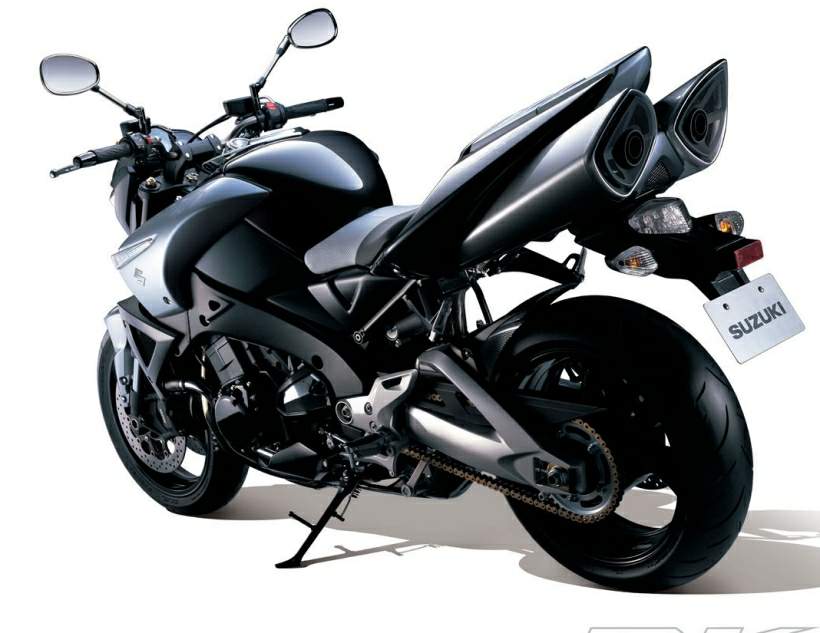


ABS устанавливается на заводе, но при большом желании можно найти мотоцикл и без неё.
Как настроить блинкер на suzuki hayabusa
Выберите тип и бренд:
- Aprilia
- BMW
- Ducati
- Harley-Davidson
- Honda
- Husqvarna
- Indian
- Kawasaki
- KTM
- Suzuki
- Yamaha
- КМЗ
- Урал
- Can-Am
- CFMOTO
- Honda
- Kawasaki
- Yamaha
- Карта сайта
- Вопросы-ответы
- Контакты
- Соглашение на обработку персональных данных
Компания ЛенМото
Запчасти, аксессуары, экипировка, тюнинг для мотоциклов, скутеров, квадроциклов, снегоходов, багги, гидроциклов, катеров и лодочных моторов.