Лучшие AV-ресиверы 2023
AV-ресиверы – лучшее, что могли придумать в мире для воспроизведения качественного звука. AV-ресивер вобрал в себя функции, необходимые для меломанов, любителей кино и видеоигр. Рассказываем, какой купить AV-ресивер для домашнего кинотеатра 2023
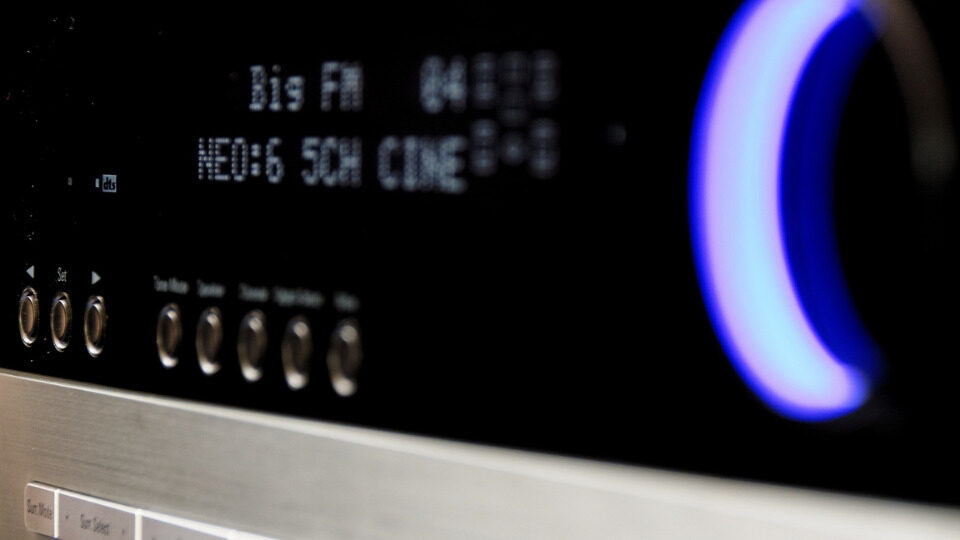
AV-ресивер – это сердце домашней медиасистемы, оборудование, способное связать воедино все устройства современного дома: усилитель звука, телевизор, медиаплеер, игровую консоль, компьютер, смартфон и даже виниловый проигрыватель. Современные ресиверы оснащены функциями, необходимыми для качественного прослушивания музыки.
Так что если вы думаете, что это устройство для приема и передачи звука сугубо для профессионалов «звукарей», то вы ошибайтесь. Хотя технари точно оценят, но не только они. Аудио-видео ресиверы условно относятся к Hi-Fi-технике и предназначены для декодирования многоканального цифрового сигнала. По сути, это многоканальный усилитель, который имеет расширенный набор функционала.
Простой пример: у вас кабельное тв, а звук отсутствует или очень плохой, так как ваш телевизор или домашний кинотеатр «не видит» формат звукоряда или воспроизводит его не так как надо. AV-ресивер легко эту проблему решает – справляется с любыми форматами. Большинство AV-ресиверов имеют декодеры Dolby Digital и, как минимум, один цифровой вход S/PDIF для подключения источников с цифровым выходом, а также самые современные декодеры DTS.
При этом «читается» дорожка с непревзойденным качеством звучания. Некоторые модели ресиверов словно эквалайзер могут имитировать концертный зал или стадион. А также создавать окружающий объемный звук кинематографического качества, все зависит от модели – бюджетной, или премиум-класса. Более того, ресивер премиум-класса способен подстраивается под окружающую реальность и делать идеальный саунд для того или иного помещения.
Наконец, AV-ресивер может использоваться как усилитель аудиопотока. Передача звука и видео осуществляется посредством цифровых интерфейсов (например, HDMI).
AV-ресиверы, как правило, оснащены еще поддержкой HDR-видео, что придает картинке насыщенные цвета, высокую контрастность при сохранении реалистичного и естественного качества изображения.
Выбор эксперта
За помощью по выбору AV-ресиверов «Комсомольская правда» обратилась к Николаю Феденеву, концертному и студийному звукорежиссеру, продакшн-менеджеру компании «Азия Мьюзик». Эксперт выбрал следующую модель в качестве лучшей:
Pioneer VSX-LX304
Об этом ресивере говорят, что это кинотеатр IMAX на дому. Отлично работает в составе домашнего кинотеатра. Устройство имеет большинство необходимых современному пользователю свойств: 9,2-канальный ресивер с приличной мощностью, 6 HDMI-входов и 2 выхода, что обеспечивает прекрасную физическую коммутацию. Здорово воспроизводит фильмы с кинематографическим качеством. Например, формата IMAX Enhanced – это мощное звучание с эффектом погружения в домашнем кинотеатре. Или Dolby Atmos — виртуальный окружающий звук и высокочастотные эффекты.
Ресивер поддерживет систему Apple AirPlay 2, что позволяет ему воспроизводить музыку или подкасты по всему дому. Поддерживается подавляющее большинство известных на сегодняшний день современных форматов звуковых файлов, при этом качество аудио не теряется, а, напротив, только значительно улучшается. Дело в том, что технология анализирует акустические свойства помещения с помощью специально выделенного микрофона и сама регулирует параметры воспроизведения, уменьшая фоновый шум.
Имеет функцию прослушивания через беспроводные наушники. Есть встроенная технология Chromecast, позволяющая управлять ресивером с любого мобильного устройства. Поддерживает основные стриминговые сервисы, такие как Deezer, TIDAL, Amazon Music, Spotify.
Основные характеристики
| Потребляемая мощность | 760 Вт |
| Количество каналов | 9,2 |
| Интерфейсы | AirPlay 2, Chromecast, Wi-Fi, Bluetooth / v4.2 /, LAN, RS-232, Google Assistant |
| Режимы звучания | IMAX Enhanced, Dolby Atmos, Dolby TrueHD, и другие звуковые форматы |
| Тюнер | FM/AM диапазоны |
В каком AV-ресивере самый лучший ЦАП: Denon, Onkyo, Yamaha или Pioneer?
Ребята, кто изучал тему детально. Рассматриваем AV-ресивер из линейки Denon, Onkyo, Yamaha и Pioneer.
У кого самый лучший ЦАП? Задача — использовать для многоканальной музыки.
Ответы
Добрый день! Вы же понимаете, что в звуковом оборудовании нет термина лучше/хуже, это всё субъективно, тем более нельзя оценить звучание голого цапа отдельно от всей остальной обвязки. Каждый производитель чипов вкладывает какое-то свое представление о том, как он должен работать, поэтому ESS отличается от BurrBrown, AK отличается от Wolfson и т.д. Из перечисленных вами брендов все топовые модели будут неплохо играть в многоканале. Но, тут важно понять, какой стандарт объемного звука у вас будет, сколько каналов. Потому что есть много более нишевых конкурентов, которые, при меньшем количестве усилителей на борту, будут играть намного интереснее. Типа Anthem, Arcam, Rotel, Marantz.
по возможности уточните «сколько вешать в граммах» . до 300 т.р. поместятся практически все ресиверы данных брендов. сравнивать будем ТОПы или как? укажите хотя бы интересующие модели
P.S. самому интересен ответ. хотя где то на уровне подсознания склоняюсь к DENON 6400 или 6500. хотя пока не определил конкретные преимущества более нового реса
В многоканальном звучании многое зависит не столько от ЦАПа, сколько от управления питанием.
Если брать самые свежие ресиверы, то сейчас в лидерах Denon x8500h. У него же — восемь новейших ЦАПов AK4490EQ — больше, чем у любого другого из вышеназванных. Плюс 1,6-киловаттный трансформатор — чистый вес больше 8 кг — это про питание — и это при том что каждый из 13 каналов питается отдельно — у него свой выпрямитель и сглаживающий буфер.
В бюджет до 300 укладывается, можно взять даже дешевле, за 250 .
Я, тоже выскажусь в пользу топового Denon AVR X-8500, С этим аппаратом можно построит самый современный многоканальный дом кинотеатр,что называется по последнему писку моды!))) Получить отличный стерео звук, а самое важное, особо не заботиться о подборе акустики, т.к. ресивер легко «потянет» даже самые капризные в раскачке АС.
Буквально на днях слушала Denon AVR-X6400Н. Он мне так понравился, что даже просто страшно представить на что тогда способен 8500 )))
BurrBrown only! А значит Pioneer!
Не понимаю вас. Верхняя линейка SC-LX901 , в нем стоит ESS SABRE32 Ultra (ES9016S)
ESS — не лучший в мире ЦАП. Есть огромное количество устройств на этом чипе с посредственным звуком. И огромное же количество на BurrBrown — с великолепным. Уйдите от масс-брендов. Они за фишки, а не за звук. Включите в стерео Pioneer топовый и вот Cambridge CXR200 и после этого вы Pioneer уже никогда не купите.
Для меня — Пионер. Хотя признаю, что и Денон хорош. Но при общих равных я бы выбрал Пионер.
Мне кажется далеко не всё зависит от ЦАПа, у китайцев самые последние стоят в разных коробочках с завлекательной ценой. Ещё и реализация и интеграция этого ЦАПа в схему играет роль, питание и прочая обвязка.
А ESS лично для меня лучше АК, хотя и ВВ тоже нравится.
Я бы взял Кембридж СХР200. Ещё даже деньги бы остались с 300 тысяч на провода.

Только авторизованные пользователи могут отвечать на вопросы, пожалуйста, войдите или зарегистрируйтесь.
Onkyo vs Denon vs Yamaha-Best Receiver for Hometheater

The number of channels is the first item to consider for a home theater system and the best compatible receiver for a desired system ( such as 5.1 or 7.2 or 9.2 etc) is a prerequisite . The most typical configuration is a 5.1 system, which includes five speakers (two pairs of floorstanding or standmount speakers, and one center speaker ) plus a subwoofe r. Other configurations are also available, ranging from 7.2, which includes surround back speakers and an extra subwoofer behind your seat, to pretty much whatever your room can handle.
How I Rated the Top Receiver from Onkyo, Denon and Yamaha Brand :
I have rated these amazing receivers on the basis of their capacity and user’s personal experiences. let’s dig more into it!
System Requirement:
When I analyzed several receivers from Yamaha and Denon as well as Onkyo, My first priority was system requirements. I try to find out which model is perfect for which set-up.I will explain my findings categorically.
Expandability of Number of Channel in Future:
Everything is upgrading day by day and maybe you need to upgrade the number of channels for the current receiver in future. So I put emphasis on the desired home theater receiver which can be upgradeable as a future requirement.
Dolby Atmos Equipped System:
Dolby Atmos®-enabled speakers generate overhead sounds in a Dolby Atmos soundtrack – without the need to put speakers in or on the ceiling. Nowadays it is a must to select receivers which support dolby atmos.
Connection:
The AV receiver links to TV devices most easily through HDMI. Between the TV and the receiver, an additional audio wire is not required thanks to ARC. The receiver may connect to playback devices such as Blue Ray through HDMI. Component-Video, S-Video, and Composite-Video are analog alternatives to HDMI. I tried to select receivers with wide array of connection ports
HDR format:
Many Ultra HD Blu-rays, as well as some Netflix and Amazon Video content, employ the HDR10 open standard HDR format. The stream comprises static information that communicates the master display’s color calibration data to the TV set. I have found out all HDR capable Denon models support HDR10 pass through. Other brands are not far behind either.
4K Video Switching Ability:
Video conversion from analog video input to HDMI level is not available on all Denon AV receivers. While some models offer video conversion at a higher price point. That is the case with Yamaha and onkyo as well. The more premium models you choose, the better 4K video performance you will get.
Multi-Tasking Ability/Multi-room Connectivity:
Seven, nine, or eleven power channels are available in multi-zone home theater receivers. They might have more speaker connections than channels at times. For example, a receiver having nine sets of speaker outputs may only be able to power seven speakers at once. So it’s almost impossible to create a multi room facility with a 5.1/ 5.2 setup. Generally the higher channel line up consists of multi room connectivity.
Budget:
I also emphasized on the budget, why do I waste extra money? If I can find a better alternative in a lower budget,Money spending needs to be justified for a worthwhile receiver. I have rated the budget friendly receivers as well as premium ones in this article.
Onkyo vs Denon vs Yamaha
Build quality
Sound formats
User friendly
Usually more
Reliability
Good enough
Fairly reliable
Very reliable
Build quality
Sound formats
Reliability
Good enough
Build quality
Sound formats
User friendly
Usually more
Reliability
Fairly reliable
Build quality
Sound formats
Reliability
Very reliable
5.1 Receiver Comparison from Onkyo vs Denon vs Yamaha:
I will now compare the 3 models I choose from the brands. They are specialized in each category. More details are given below the table
Yamaha RX-V385
Onkyo TX-NR696
Denon AVR-S960H
DTS play fi
Chromecast built-in
Not available
Not available
Not present
Dolby atmos
Not available
HDMI output
Not supported
Not supported
Yamaha RX-V385
DTS play fi
Chromecast built-in
Not available
Not present
Dolby atmos
Not available
HDMI output
Onkyo TX-NR696
DTS play fi
Chromecast built-in
Dolby atmos
HDMI output
Not supported
Denon AVR-S960H
DTS play fi
Chromecast built-in
Not available
Dolby atmos
HDMI output
Not supported
Yamaha RX-V385- best value receiver
Home entertainment systems don’t have to be prohibitively expensive. Many entry-level home entertainment system lines exist that are easy to fit into your budget and perform admirably. If you’re looking for a nice home entertainment system at a reasonable price, When it comes to purchasing a home cinema system, the Yamaha RX-V385 is a fantastic affordable alternative. Yamaha’s well-received home theater systems continue to include it. While it may not have the most up-to-date features, it is an excellent system for an entry-level model.
Yamaha introduced the RX-V385 to the market for the first time in 2019. This is the beginning model in Yamaha’s vast series of AV receivers. The RX-V385 is a 5.1-channel receiver that produces 70 watts of power. Dolby True HD, DTS-HD Master Audio, and the YPAO audio calibration system are all included.
Bluetooth, 4K support signal, Virtual Cinema DSP, HDMI upscaling, HDR passthrough, and Biamp capabilities are just a few more outstanding features. It’s also highly cost-effective. For roughly $250, you get all of these features and more.
I think this is one of the best budget friendly receivers out there. There are a lot of speakers in the market but this yamaha model is good in every sense.
Onkyo TX-NR696- Best for home theatre
The TX-NR696 is the company’s latest mid-level model, and it’s a hit. The ‘696 offers a high degree of performance and a set of features that is fully loaded at a reasonable price. The Denon AVR-750H is a good second choice since it sounds better with music and costs less, but the Onkyo has more features and a more well-rounded, powerful sound overall. The TX-NR696 has the features, audio stability, and versatility of the top models at its price.
The TX-NR696 is a 7*100-watt-per-channel receiver with a long list of capabilities, including compatibility for Dolby Atmos and DTS:X. In comparison to competitor Yamaha, which only includes four HDMI connections on the back of devices like the RX-V485, Onkyo has a whopping six. The ports support the most recent 4K standards, such as HDR10 and Dolby Vision.
Built-in Chromecast, DTS Play-Fi, Spotify Connect, AirPlay, and Bluetooth are among the streaming protocols supported by this video and audio receiver. The remote control was the one thing we didn’t like (it was just a bit too much, even with all those connectivity options)
Denon AVR-S960H- Best for music fans
Denon is usually the first brand that springs to mind when considering AV receivers, and for good reason. For years, the company has been producing superb models with exceptional sound quality.
While its competitors are limiting their receiver releases ( Sony hasn’t released a new model since 2017 and Onkyo won’t have a follow-up to its 2019 goods until mid-2021), Denon isn’t. The Denon AVR-S960H is a new model that has updated capabilities like HDMI 2.1 connections with eARC and 8K video support while keeping Denon’s legendary performance.
The Denon AVR-upgraded S960’s are more modest than Yamaha’s futuristic RX-V6A, which appears to have gone back to the drawing plan. When comparing the two radios side by side, the Denon sounded smoother but lacked some dramatic weight. I found myself searching for the Yamaha remote far more than Denon, and it wasn’t only because of the sleek new style, but also because of the sound quality.
I am a huge music fan so if this receiver impressed me then it must have done something right. At this price point audiophiles will have no complaints regarding the sound quality.
Product differentiator
When I analysed these 3 models I found some interesting facts about them. I distinguished all the differences and made a list of all the key points. This will help you to find the main differences which might come in handy while choosing your desired receiver.
Design and build
Yamaha RX-V385 – The RX-V385 is identical to its predecessor, the RX-V383, in terms of design. This isn’t much of a disadvantage because most AV receiver lines are relatively similar in terms of appearance, style, and construction.
The primary display, which communicates all of the receiver’s operations, is located on the upper half. Direct is controlled by a tiny circular button on the right, while the main power button is on the left. The mic port for the YPAO function is on the left side.
A remote control is included with the receiver. With the remote, there’s nothing too out of the ordinary. It can, however, perform all functions. It’s a standard plastic remote with a grid of buttons across the top. The only disadvantage could be that the button grouping might be a bit better.
Denon AVR-S540BT- A serviceable remote is included with the Denon 540BT. It’s basic and straightforward to use. When you turn the amp around, you’ll see all of your potential connections. One item to note is that, unlike the Yamaha RX-V395, the 540BT only includes binding clips for the speaker connections, rather than 5-way binding posts.
It even includes a radio antenna hookup (is that even a thing?). Anyway, there’s a row of 5 HDMI inputs and one output at the top. HDCP 2.2 and 4K video are supported by the output. HDCP 2.2, HLG, HDR, BT.2020, and 4:4:4 color sampling are all supported via three HDMI inputs.
Denon AVR-S960H- The Denon AVR-S960H has a similar appearance to other receivers, with a black color scheme, LED display, selection/volume knobs, and a few shortcut buttons for the most commonly used inputs. It’s adequate, but it pales in contrast to the Yamaha RX-slick V6A’s futurism.
The receiver features six HDMI inputs (one of which is capable of 8K) and two HDMI outputs (one with eARC). The Denon can decode Dolby Atmos and DTS:X, as well as upscaling technologies including DTS Virtual:X and Dolby Atmos Height Virtualization Technology.
Quality of Audio
Yamaha RX-V385- You’ll have to make do with the simplest configurations because it’s a 5.2 channel receiver. DTS:X and Dolby Atmos aren’t included. These characteristics are included in the majority of today’s 5.1 receivers.
The receiver of the RX-V385 isn’t particularly powerful. However, with a power output of 70 Watts per channel, you can rest confident that it is powerful. If you’re dealing with a tiny to medium-sized home theater room, the RX-V385 will suffice.
Denon AVR-S960H- When it comes to receivers, Denon and its compatriot Marantz have a “house sound” that is more comfortable than the Yamahas and Pioneers of the world. While this normally indicates that they function better with music, I found that the Yamaha RX-V6A was better at getting the pulse pumping without being unpleasant.
The Denon provided a well-balanced sound, but I was able to catch on more subtle elements in the song with the Yamaha, such as the drumming, clicking tongue noises during the climax.
Onkyo TX-NR696- Dolby Surround and DTX Neural: X technologies are included in the TX-NR696. These two technologies can detect spatial processes in typical multi-channel audio recordings and combine them into 3D sound effects which can be played back using current sound object-based speaker systems.
When consumers don’t have or don’t want to construct ceiling speakers, the TX-NR696 may replicate the sound effects of the sky sound field using Dolby Atmos Height Virtualizer or DTS Virtual: X technology, giving the illusion of three-dimensional immersive sound.
Features and connectivity
Yamaha RX-V385- Although the RX-V385 is lacking in features, there are a handful that are good at their job. The calibrated audio system included with the receiver is Yamaha’s YPAO system.
It’s actually rather simple to set up the receiver. People with only a rudimentary understanding of how to set up audio systems may do it with ease. If you’re having trouble understanding the instructions, you may use the Yamaha AV Receiver setup guide application to assist you.
Onkyo TX-NR696-This TX-NR696 should be considered an improved variant of the TX-NR686. Although the TX-NR696 has a similar look and channel architecture to the Onkyo TX-NR686, the internals are considerably different. Use a new HDMI circuit board with a greater surface area, increased robustness, and improved technology. Additionally, cut the cable path to reduce interference on the A/V signal
Denon AVR-S960H- This AV receiver offers 90W per channel and has independent and highly functioning power amplifiers on all channels. This gadget will provide good performance. It features a lower impedance driver and is compatible with a wide range of speakers. The Auto Eco Mode function adjusts the power output to speakers based on the on-screen eco meter and volume level, resulting in significant energy savings.
The obvious question might come to your mind such as “ is onkyo better than yamaha?” or “is denon better than yamaha?” To make this easier I will choose my winner in this channel category.
Here, I found the yamaha model gives clearer and better performance. There’s no question about durability of yamaha models. They are a clear winner if you value the company name and reliability. But if you look for more features in a budget then onkyo should be your choice.
7.1/7.2 receiver from three best Brand: Denon vs yamaha vs onkyo
One speaker equals one channel. Make sure your new receiver has more than enough channels to accommodate all of your current speakers, as well as any more speakers you may wish to purchase in the future. You’ll need at least five channels if you want surround sound.
A 7 channel setup is enough for medium to higher use. It will give you a good enough experience. The least you can do in an average budget is buy a receiver with 7 channels. Read the whole article to know more about 7 channel receivers.
Denon AVR-x2700H: Best mid ranger
Denon’s X series AV receiver is used here. This is a Denon premium series. In the year 2020, this model will be released. It has a power output of 95 W per channel and is driven by two channels. Immersive 3D sound is included with this Denon AV receiver. It supports Dolby Atmos, DTS:X, and DTS Virtual:X, as well as Dolby Atmos height virtualization technology. Advanced video technologies such as 8K at 60 Hz and 4K at 120 Hz are also supported by the Denon AVR-X2700H. It supports HDR 10,Dolby Vision, HDR 10+,HLG, and 8K upscaling, dynamic HDR among other video formats.
The much applauded Denon establishes an assistant, leading you to the appropriate configuration for the first time, through every stage of the setting procedure. That’s why denon employs industry-leading room calibration technology such as Audyssey , which detects and calibrates sound from the video receiver automatically to fit your listening environment because Every room or hearing area is different.
Onkyo TX-SR444 7.1 : Best of Modern Features
The TX-SR444 is a powerful and versatile 7.1 channel receiver. Thanks to HDCP 2.2 compliance, it can send 4K video to your monitor through HDMI. The graphical hook-up instructions on the back panel make connection and configuration simple. AccuEQ room calibration tailors the sound to your specific listening environment and speaker system. There’s also a handy Quick Setup button on the remote that allows you to change settings without halting the show.
The receiver uses Onkyo’s WRAT amplifier technology, which can provide up to 65W per channel at 8 ohms for powerful audio. Additional height speakers can be connected for improved overhead sound effects thanks to integrated Dolby Atmos compatibility. Wirelessly listen to music from supported devices such as laptops, MP3 players, cellphones, and tablets with the built-in Bluetooth 2.1 connectivity.
Yamaha RX-V6A : All in one
The new receiver has 7.2 channels and 100 watts of built-in amplification, as well as all of the newest features you’d expect from a receiver at this price point. As a result, we receive Dolby Atmos and DTS:X up-mixing technologies, as well as Yamaha’s own virtual technology.
There’s also the YPAO R.S.C. from Yamaha, which includes a Multipoint auto calibration system, USB, High Resolution Audio and Bluetooth streaming,Airplay 2 and Musiccast for online and multi-room audio, wireless rear speaker support,voice control,Music Enhancer and, of course, the new HDMI 2.1 port with all of its game-specific features like ALLM, VRR, QMS, and QFT. This is a very good receiver for gaming .
The RX-V6A stands out from the competitors, as well as all of this year’s new Yamaha receivers, because it’s the only one featuring multiple HDMI 2.1 connectors. While the competition only has one, the RX-V6A has three, plus four more of the older HDMI 2.0 kind.
7.1/7.2 Receiver Comparison from Yamaha vs Denon vs onkyo :
I will now show you the key differences of these top models from the 3 brands. Each one is special in their own right. 7.1 receivers are usually in the mid category. They are neither top of line premium or budget options.
Sony vs Yamaha Receiver: Review for Different Home Theater Setup

Looking for a perfect AV receiver for your home theater but could not figure out which could be better? Or confuse between Sony VS Yamaha Receiver ? This is obvious because there are a ton of different models from different manufacturers in the marketplace.
Sony offers impressive sound quality with many advanced features. Another hand Yamaha Receiver gives excellent surround sound with ease of use.
So, if you are planning on having a receiver but confuse between Sony VS Yamaha Receiver which is best. Or just wants a perfect receiver for the immersive home theater experience. Then keep a close eye through this article.
Here you will get all the possible info about a perfect receiver and all differences between Sony VS Yamaha Receiver. By the end, you will definitely find the right one.
Why Need A Receiver?
Having an amp, pre-amp or tuner separately costs quite a good amount of money. And still may not fulfill your requirement with the best home theater experience.
But what if you get all this in a package and don’t need to spend those extra expenses. This package is called the receiver.
Yes, a receiver contains all of these things and now modern receivers offer much more than these. They now even support 4K to 8K content with great sound formats like Dolby Digital, Dolby Atmos , or others.
A receiver mainly decodes the sound signal and makes them so incredible so you can hear a beautiful and powerful sound. Modern receivers can handle now up to 11.1ch speakers. There are also lots of budget-friendly home theater receivers .
So, not wasting time anymore let’s see the latest receivers from Sony VS Yamaha for you to choose as early as possible.
Sony Receiver
Sony receivers provide high-definition sound with modern technology and features. Like other speaker brands, Sony also has different channel receivers and they work efficiently.
For you 2ch speaker or even 9.2ch speaker, you can find from Sony what you need. Though Sony has stopped launched newer receivers for quite a long time. But all the receivers are capable of giving tough competition to other brands easily.
- Sony STR-DH190 2-ch Home Stereo Receiver
- Sony STR-DH790 7.2-ch AV Receiver
Yamaha Receivers
Yamaha receivers are mostly popular for they are easy to set up, great efficiency in performance. Also, there are plenty of features, and the build quality good too.
You can find from 2ch to 11.1ch receiver. So, it will be easier to find the right one that is best suited for your home theater.
- Yamaha R-N602 Networked Receiver
- YAMAHA R-S202BL Receiver
Sony VS Yamaha Receiver: Quick Comparison
Let’s have a quick look at the difference between Sony VS Yamaha so it becomes easy for you to choose.
- Sound quality: premium sound quality.
- Build quality: Good
- Reliability: Average
- Supports: 4k, HDR, HDR10
- Supported music streaming services: Few
- Cost: Both budget-friendly and expensive.
- Sound quality: Great with some advanced tech.
- Build quality : Good
- Reliability: Great
- Supports : 4K, 8K, HDR, HDR10
- Supported music streaming services : Many
- Cost Both budget-friendly and expensive: Both budget-friendly and expensive high-quality receiver.
Sony VS Yamaha Receiver: Different Types
Basically, receivers are of two types wired and wireless. And with the type name, you can understand what is the difference.
The wired receivers stay connected with wire and thus give powerful and efficient performance than others.
Other hand wireless receivers don’t need any kind of cable you can use them without wires. They also work great and today almost all receivers are wireless because of the ease of use.
But besides these two types receivers are different according to channel handling capacity and input. And you can choose according to your need like 5.1, 7.1, 9.1, 11.1 or even 2ch receivers.
Also read about Yamaha VS Denon Receiver’s full comparison in detail.
9.2 Channel
YAMAHA AVENTAGE RX-A3080 9.2-Channel
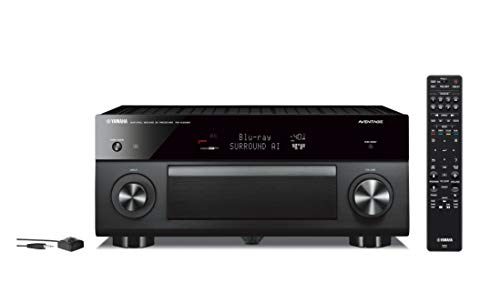
- Channel: 9.2
- Output Power: 150 watts
- Connectivity Technology: Wi-Fi, Bluetooth, Airplay, HDMI
- Total HDMI Ports: 10
- Supported Internet Services: TIDAL, Pandora, SiriusXM, Napster, Spotify
- Dolby/DTS: Yes
- DA Converter: ESS 384 kHz / 32-bit SABRE PRO Premier DAC ES9026PRO (for main 7 channels)
- Dimension: 17-1/8″ x 7-1/2″ x 18-5/8″ (with antenna up: 17-1/8″ x 10-5/8″ x 18-5/8″)
Yamaha Aventage RX-A3080 4K HD AV receiver is incredible and perfect for home theater and music. Al technology, ESS Sabre DACs, Dolby Atmos, DTS, HDR10, Dolby Vision, and many more excellent features it contains.
Also, lots of internet services it supports like Spotify, Pandora, Napster so you can listen to countless music. Moreover, the Wi-Fi and Bluetooth connection makes it easier to use.
This receiver gives high-definition sound quality both for movie and music. Every word of dialogue you can hear is detailed, subtle, and clear. It can handle 7.2ch to 9.2ch speakers.
With the high tech, this Yamaha receiver is absolutely perfect for home theater.
7.2 Channel
Sony STRZA1100ES AV Receiver 7.2

- Channel: 7.2
- Output Power: 100 watts
- Connectivity Technology: HDMI
- Total HDMI Ports: 5
- Supports: Dolby Atmos Height Virtualization, Dolby Atmos, DTS:X and DTS Virtual:X
- Dimension: 17.1” x 6” x 13.3”
Take advantage of Dolby Atmos and DTS X for getting the more immense audio in your home theater system. The 7.2ch receiver provides a good number of features for the audioholic to have a dynamic home theater.
The 100-watt power for each speaker gives the detailed and clear audio ever. And the 4K HDR compatibility is best for the great video quality.
Get a room-filling multidimensional surround sound experience on a great budget if you choose this Sony STR-ZA1100ES.
Sony STR-ZA3100ES 7.2 Channel AV Receiver

- Channel: 7.2
- Output Power: 110 watts
- Connectivity Technology: HDMI, USB, Ethernet
- HDMI Connectivity: 6/2
- Total HDMI Ports: 5
- Supports: Dolby Atmos Height Virtualization, Dolby Atmos, DTS:X and DTS Virtual:X
- Dimension: 24 x 20 x 3 inches
A premium quality sound is expected from this receiver as it offers lots of excellent technologies. Like the 110W @ 8 ohms, 1KHz, 0.9%, 2CH, 4K HDR compatible, and great battery.
This turns the audio so crisp, clear, and powerful. The whole room fills with surround sound and when you connect with the home theater then surely hope for the incredible music and movie.
Also, the ES-grade multichannel system is the latest for streaming over wireless music as much as you want and what you want.
Also the sufficient input and output for a 7.2ch speaker connection. The build quality and the design with black color make a good combination for any home theater system.
Yamaha AVENTAGE RX-A1080 7.2-Channel

This RX-A108 has all the same features as the AX-3080. But the only difference in this model is for the 7.2 channel set up.
The sound is premium quality abounds with the latest sound format. Which turn the sound more immersive and breathtaking.
The music-to-movie dialogue whether it is a romantic or action movie you will get the full experience. In a word, this won’t take time to turn your home theater into a movie theater.
Yamaha RX-A880 Receiver
- Number Of Channel: 7.2
- File Format: MP3 / WMA / MPEG-4 AAC: up to 48 kHz / 16-bit, ALAC: up to 96 kHz / 24-bit,DSD: up to 11.2 MHz, FLAC: up to 192 kHz / 24-bit
- Output Power: 100W
- Connectivity Tech: Airplay, Bluetooth, Wi-Fi
- Supported Internet Service: Internet radio, Tidal, Deezer, Pandora, Spotify
- Dimension: 14.96 x 17.13 x 6.73 inches
Like all the premium quality Yamaha receivers this RX-A880 also offers all the impressive features. The 4K HDR, Dolby Atmos, Phono, Wi-fi, Bluetooth with many pieces of music streaming services.
Besides these excellent features, you can expect a premium quality sound fills your whole room. It is the complete solution to your 7.2ch speaker setup.
With a projector or TV, you can enjoy a full movie night like the movie theater. The massive and wider sound range, powerful punch in the ear can make the room into a live concert.
- YAMAHA AVENTAGE RX-A780 7.2-Channel
- Yamaha TSR-700 7.1 Channel AV Receiver with 8K HDMI
5.1 Channel
Sony Str-k502 Digital Home Theater 5.1 Stereo Receiver
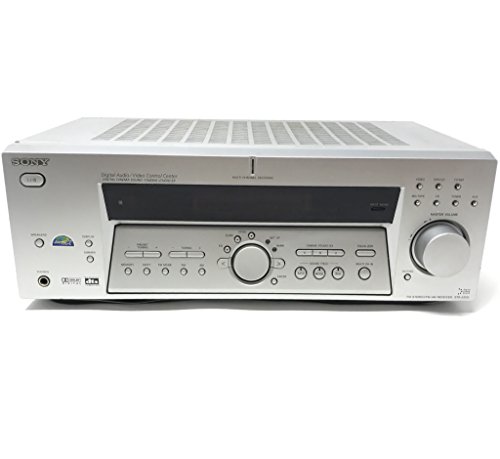
- Channel: 5.1
- Power: 220 watts
- Supports: Dolby Pro Logic II, Dolby Digital Surround EX, DTS-HD, DTS, Dolby Pro Logic, Dolby Digital
- Inputs: Digital Coaxial RCA, Coaxial Digital, Multi-Channel RCA, Optical Digital (Toslink), Component, AM, AUX, Digital Optical TOSLINK, Coaxial RF/F-type, Two-Channel RCA
- Dimension: 18 x 14 x 7 inches
For a budget-friendly receiver with a 5.1ch speaker set up this Sony, Str-k02 model can work perfectly. The digital formats it supported to make the audio great. So, even for your home theater, this receiver can give a good experience.
Moreover, the silver color and the build quality are also good. Not like the high-end receiver but on a good budget this receiver offers everything that you need for a 5.1ch setup.
Sony STR-DE675 Surround Sound Receiver
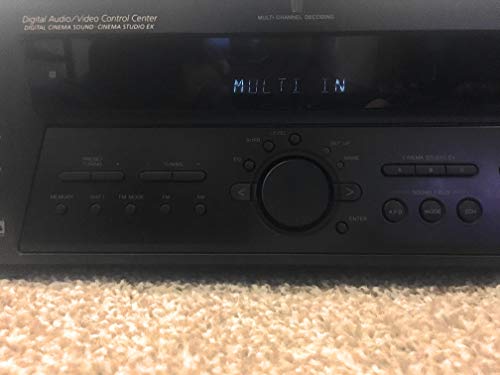
- Channel: 5.1
- Output Power: 500 watts
- Power: 100 watts x 2 (stereo) into 8 ohms (20-20,000 Hz) at 0.09% THD, 100 watts x 5 in surround mode
- Connectivity Technology: Wired
- Supports: Dolby Digital, DTS, Pro Logic, 32-bit DSP for 15 modes, 3 Digital Cinema Sound modes
- Total HDMI Ports: 4
- Input/ Output: 3 optical digital input, 1 S-video output, 1 coaxial digital input, 3 S-video inputs
For a complete 5.1ch home theater set up, you can surely have this receiver as it offers a wider range of impressive features and the sound quality is also as you expected like dynamic.
You can switch two modes one for home theater at 100w x 5ch and for stereo 100 x 2. This helps you to choose what you want. And the power switching feature helps to get the right sound for the specific home theater or stereo purpose.
Moreover, the plenty option for input and output connection with compatibility of Dolby Digital, DTS, and others makes it way too good in this price range.
2 Channel
YAMAHA R-N303BL Stereo Receiver
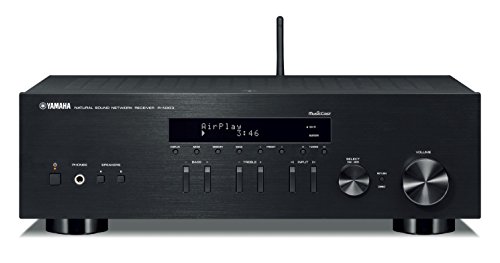
- Number Of Channel: 2
- Frequency Response-0 ± 0.5dB / 0 ± 3.0dB
- Minimum RMS Output Power: 100W + 100W (8ohms, 40Hz-20kHz, 0.2 percentage THD)
- Output Power: 100W
- Connectivity Tech: Airplay, Bluetooth, Wi-Fi
- Supported Internet Service: SiriusXM internet radio, Tidal, Deezer, Pandora, Spotify
- Dimension: 13.38 x 17.18 x 5.5 inches
This would be good for those who don’t have or don’t want a big home theater set up instead want to enjoy a 2ch speaker or listen to music. The Wi-Fi and Bluetooth connection help to stream over favorite music or content.
Besides some other music features, it supports Spotify, Pandora, etc. You can even control with Alexa.
See your favorite movie on TV or enjoy music with your phone connecting to the receiver. Every sound will hear so defined and beautiful. All these happen because of the high power amp and sufficient power supply.
This receiver has the capability of turning your room into a concert environment. So, it is best for any small speaker widely.
Sony VS Yamaha Receiver: Model By Model Difference
Sony STR-DN1080 VS Yamaha RX-V685
Sony STR-DN1080
Yamaha RX-V685
Rated Output Power
100 W (6 Ω, 20 Hz — 20 kHz, 2 channel driven)
90 W (8 Ω, 20 Hz — 20 kHz, 2 channel driven)
Connectivity
Ethernet, Wi-Fi, Bluetooth
Ethernet, Wi-Fi, Bluetooth
Dolby Atmos, DTS:X capable, HDR10, Dolby Vision, 4K Passthrough, AirPlay, DLNA, Chromecast
Dolby Atmos, DTS:X capable, HDR10, Dolby Vision, 4K Upscaling, 4K Passthrough, AirPlay 2 via firmware update, MusicCast
HDMI Input
USB and Phono inputs
19 x 15 x 8.38 inches
17-1/8″ x 6-3/4″ x 14-7/8″
Sony STR-DN1080
Rated Output Power
100 W (6 Ω, 20 Hz — 20 kHz, 2 channel driven)
Connectivity
Ethernet, Wi-Fi, Bluetooth
Dolby Atmos, DTS:X capable, HDR10, Dolby Vision, 4K Passthrough, AirPlay, DLNA, Chromecast
HDMI Input
19 x 15 x 8.38 inches
Yamaha RX-V685
Rated Output Power
90 W (8 Ω, 20 Hz — 20 kHz, 2 channel driven)
Connectivity
Ethernet, Wi-Fi, Bluetooth
Dolby Atmos, DTS:X capable, HDR10, Dolby Vision, 4K Upscaling, 4K Passthrough, AirPlay 2 via firmware update, MusicCast
HDMI Input
USB and Phono inputs
17-1/8″ x 6-3/4″ x 14-7/8″
Sony STR-DN1080 VS Yamaha RX-V685 two incredible receivers containing all the latest and advanced features. Both offer from 4K/60 fps, HDR, Dolby Atmos to multiple HDMI, hi-res music and so much.
The Dolby Atmos and DTS X help to get the surround sound and HDR 4K Dolby Vision content makes your video more detailed and realistic.
Both also have various music streaming options like Spotify, Bluetooth, Airplay, Wi-Fi with a built-in streaming device. But the Sony gives you access over Chromecast which the Yamaha model doesn’t instead support built-in Qobuz, Tidal, and Deezer.
Coming to the design there is no exceptionality in the design. Both have the traditional receiver design have a black finish. A boxy shape with all kinds of required controls and inputs with them.
While Sony STR-DN1050 wins awards a few years back for the great sound quality this STR-DN1080 offers much more than that. So, you can imagine how fantastic sound quality it offers.
Other hand Yamaha is no less than it. It also offers powerful and clear sound quality best for home theater.
Sony STR-DN1080 Cons
No phono input option.
Yamaha RX-V685 Cons
No built-in Chromecast.
Winner: Both
Sony STR-DH590 VS Yamaha RX-V485
Sony STR-DH590
Yamaha RX-V485
Rated Output Power
90 W (20 Hz — 20 kHz, 6 Ω)
80 W (20 Hz — 20 kHz, 8 Ω)
Connectivity
Ethernet, Wi-Fi, Bluetooth
HDR10, Dolby Vision, 4K Passthrough
HDR10, Dolby Vision, 4K Upscaling, 4K Passthrough, AirPlay 2 via firmware update, MusicCast
17.0 x 5.2 x 11.8″
17.1 x 6.4 x 12.9″
Tuner Type
Sony STR-DH590
Rated Output Power
90 W (20 Hz — 20 kHz, 6 Ω)
Connectivity
HDR10, Dolby Vision, 4K Passthrough
17.0 x 5.2 x 11.8″
Tuner Type
Yamaha RX-V485
Rated Output Power
80 W (20 Hz — 20 kHz, 8 Ω)
Connectivity
Ethernet, Wi-Fi, Bluetooth
HDR10, Dolby Vision, 4K Upscaling, 4K Passthrough, AirPlay 2 via firmware update, MusicCast
17.1 x 6.4 x 12.9″
Tuner Type
Here Yamaha RX-V485 is better suitable for home theater than the Sony STR-DH590. They have some same features but for Yamaha, it offers a little bit more like the automatically calibrate sound. So, it fills your entire room with immersive sound.
But if you have a 5.2 channel speaker home theater then go with Sony. Otherwise, for a 5.1ch the Yamaha is perfect.
Besides both incredible receiver gives some high-end sound and video on the screen. With some advantages of streaming music with a phone or laptop. You can use both Wi-fi and Bluetooth with the Yamaha receiver but for Sony here only it is compatible with Bluetooth.
Hence Sony STR-DH590 gives 90 watts per channel, 6 ohms impedance, DCAC, supports Dolby Vision and HDR10. And plenty of input option Optical and coaxial digital audio inputs, 4 analog stereo audio inputs, HDMI 2.0 audio/video switching: 4 in, 1 out.
Whereas RX-V485 supports 4K UHD, HDR10, HLG, Dolby Vision, input connection HDMI 2.1 with HDCP 2.2 (4 in/1 out), etc.
So, a perfect home theater incredible experience you can expect with these two receivers. Every movie action or emotional you can enjoy like you are there in the scene.
Also, the surround sound absolutely creates a 3D surround environment which is praise-worthy in one word.
Sony STR-DH590 Cons
Some issue with the connectivity.
No wifi connection.
Yamaha RX-V485
Not so noticeable.
Winner: Yamaha RX-V485
Sony STR-ZA2100ES VS Yamaha RX-A2080 AVENTAGE 9.2 Channel
Sony STR-ZA2100ES
Yamaha RX-A2080 AVENTAGE
Rated output power
75 W (20 Hz — 20 kHz, 8 Ω)
140 W (20 Hz — 20 kHz, 8 Ω)
Connectivity
Ethernet, Wi-Fi, Bluetooth
DTS:X capable, HDR10, Dolby Vision, Dolby Atmos, 4K Passthrough , 4K Upscaling
Dolby Atmos, DTS:X capable, HDR10, Dolby Vision, 4K Upscaling, 4K Passthrough, AirPlay 2 via firmware update, MusicCast
USB and Phono
16.9375’’ x 6.875’’ x 17.8125’’
17-1/8″ x 7-1/2″ x 18-5/8″
Sony STR-ZA2100ES
Rated output power
75 W (20 Hz — 20 kHz, 8 Ω)
Connectivity
DTS:X capable, HDR10, Dolby Vision, Dolby Atmos, 4K Passthrough , 4K Upscaling
16.9375’’ x 6.875’’ x 17.8125’’
Yamaha RX-A2080 AVENTAGE
Rated output power
140 W (20 Hz — 20 kHz, 8 Ω)
Connectivity
Ethernet, Wi-Fi, Bluetooth
Dolby Atmos, DTS:X capable, HDR10, Dolby Vision, 4K Upscaling, 4K Passthrough, AirPlay 2 via firmware update, MusicCast
USB and Phono
17-1/8″ x 7-1/2″ x 18-5/8″
These two receivers are great in their ways but often they are being compared. If you are willing to have a 7.2ch connection then the Sony STR-ZA2100ES.
Otherwise for exploring a newer world in the home theater then the Yamaha RX-A2080 AVENTAGE is the only here that can serve you fully.
Both of them support some amazing features like Dolby Atmos, DTS X, HDR 10, 4K upscaling. So, you can get the super audio as well video quality which makes your movie experience outstanding as for an amazing movie both the sound and video quality needed.
But the Yamaha here offers more power 140w which Sony doesn’t. Also, the musical streaming app like Spotify, Tidal, Deezer, Napster Yamaha gives not Sony. This makes Yamaha more incredible for music lovers.
Moreover, the lack of Wi-fi or Bluetooth in Sony STR-ZA2100ES and insufficient inputs makes the winner RX-A2080 anyway.
But one important thing for sure is both these receivers are high quality. High-defined dynamic sound is expected and they are well done as per expectation.
Sony STR-ZA2100ES Cons
Lack of wifi, Bluetooth.
Also fewer music streaming services.
Yamaha RX-A2080 Cons
Sony VS Yamaha Receiver: Main Difference
Sound Quality
Comparing the sound quality of Sony VS Yamaha receiver is a bit tough as both give outstanding receivers with high-end sound quality. But Sony is loved more by the users than Yamaha.
But here my perspective is different. As the music taste differs from person to person you may not be similar to mine. So, it is best to experience by own than listening to others.
For your easy way to choose let me point out something. The Sony gives a dynamic and powerful sound quality. The music or movie sound is good enough for any kind of content.
The latest Sony receivers give more realistic sound and detailed. The crispness and beautiful sound they can produce suitable for home theater.
But Yamaha receivers features some more advanced tech so the sound becomes robust and that what the user wants for their home theater. Also, the setup is easy, and using is not problematic at all.
But in the end, it will be only your decision.
Great Reliability Makes The Receiver More Efficient
Reliability having a wireless connection through Wi-Fi or Bluetooth. If your receiver has the ability to be connected with Wi-Fi or Bluetooth then you have a reliable receiver.
But if not, then this is a problem as you cannot be able to stream with your phone, laptop, or tab. Or with other streaming devices. So, before having receivers make sure they are reliable.
Modern every receiver is good reliable but comparing Sony VS Yamaha; Yamaha is more reliable than Sony. Because in some Sony receivers there is no Wi-Fi connection.
But this problem does not seem with Yamaha receivers a lot.
Streaming Support
Today a wider range of usage of streaming music or other content. These 100 plus streaming devices or software are there. You can easily stream through your phone or tab if your receiver having a wireless connection.
Here both Sony VS Yamaha won the race as they offer a great range with streaming support. The Spotify, Airplay, Tidal, Dolby Atmos, HDR 10 support all these supports both the brand receivers.
So, whatever you are buying see the streaming services first if you are an audiophilic and want thousands of music to stream.
Sony VS Yamaha Receiver |Excellent Features
Modern receivers are day by day becoming updated and thus consuming more and more newest features. And in the competition field manufacturers are racing who can give more latest feature to the users.
Sony and Yamaha receivers featured excellent features. Some of their receivers support 8K also. Along with the latest video format Dolby Vision, HLG, HD10, UHD. And the audio format like Dolby Atmos, DTS, DTS X, Dolby Digital, or many others.
Also, wireless connection and plenty amount of input connection is there. But here is also the winner is Yamaha as they try to feature the high tech in every receiver which the Sony is a little bit backward.
Sony vS Yamaha Receiver: Which Is Best For Home Theater Or Music
We have seen all the possible differences between these fantastic brands Sony VS Yamaha. And by now you may already make an imagination about which is appropriate for your home theater or music.
Shortly I would say that if you are searching for a receiver only for music or normally want to upgrade your home theater then go for Sony receivers. Though Sony is a powerful brand past few years it is not making newer receivers.
On the contrary, Yamaha is trying to getting newer tech as much as possible. Yamaha receivers are best for setting up a whole new home theater world.
Even you will find the 11.1ch receiver if you are intending of setting up 11 channel speaker.
But one thing really matters is the price range. If you want some advanced tech but on a little budget under 1000$ then there are plenty of options. But if you can spend a big amount then nothing to worry about at all. Choose one from my list you won’t regret your whole life for sure.