Как удалить Google Диск

Google Диск предлагает отличный набор функций для управления файлами, резервного копирования и совместной работы в облаке. Многие пользователи полагаются на нее в своем офисе, но это также популярная услуга среди домашних пользователей, поскольку она позволяет им легко хранить свои важные файлы в облаке и получать к ним доступ из любого места. Хотя Google Диск имеет веб-интерфейс, вы также можете использовать настольное приложение для Mac или Windows для управления содержимым вашей учетной записи на Диске. Если вас больше не интересуют службы Google Диска или настольное приложение, то вот инструкции по удалению Google Диска:
Как удалить Google Диск в Windows
Сначала щелкните правой кнопкой мыши значок Google Диска на панели задач во время работы приложения и выберите «Настройки». Выберите «Отключить учетную запись… » и дождитесь выхода из системы. Как только это будет сделано, полностью закройте Google Диск. Перейдите в меню «Пуск» -> «Приложения и функции» и найдите Google Диск в списке установленного программного обеспечения. Выберите его и нажмите « Удалить », чтобы завершить удаление.
Как удалить Google Диск на Mac
Откройте Google Диск -> Настройки -> Учетная запись , а затем нажмите «Отключить учетную запись… ». После этого выйдите из приложения и перейдите в Finder -> Приложения . Найдите значок Google Диска и перетащите его в корзину. Наконец, откройте Finder -> Go -> Go to Folder и введите ~ / Library . Оказавшись там, найдите и удалите следующие папки / файлы:
- Библиотека / Поддержка приложений / Google / Диск
- Библиотека / Кеши / com.google.GoogleDrive
- Библиотека / Групповые контейнеры / google_drive
- Библиотека / Настройки / com.google.GoogleDrive.plist
- Библиотека / Cookies / com.google.GoogleDrive.binarycookies
How to Use Google Drive on Windows 10
If you already have Google Drive installed on your phone, you should install it on your Windows 10 PC. You may find the cloud storage service even more useful. Google Drive lets you edit sheets and docks with your mouse and keyboard for faster input. It’s easier to upload music and video not taken with Android phone through your Windows 10 PC. You can share and collaborate over Google Drive on Windows 10 with just a right-click. Windows 10 doesn’t have Google Drive support built-in, but you can link your PC to the service anyway. Here’s how to use Google Drive on Windows 10 PC to store, sync and share your documents, pictures, music and videos.
Downloading & Installing Google Drive
There are three ways to use Google’s cloud storage service. The Google Drive program lets you interact with your files and sync new files automatically. The Google Chrome extension and the Drive website let you add new files and open old files that aren’t stored locally on your PC. For the best results, download the Google Drive program to your Windows 10 PC. It syncs files while you work. Download the Google Drive from Google.com Click on the Accept & Install button.
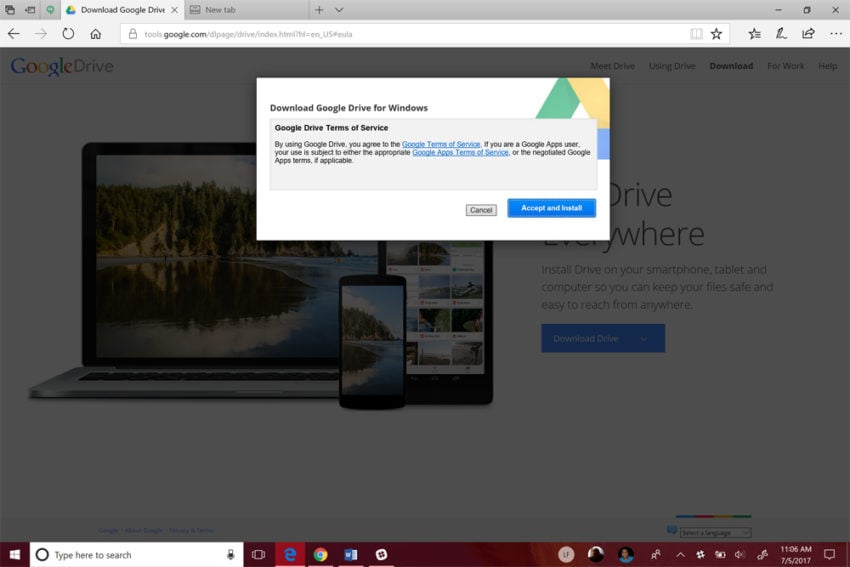 Tap or click on Run.
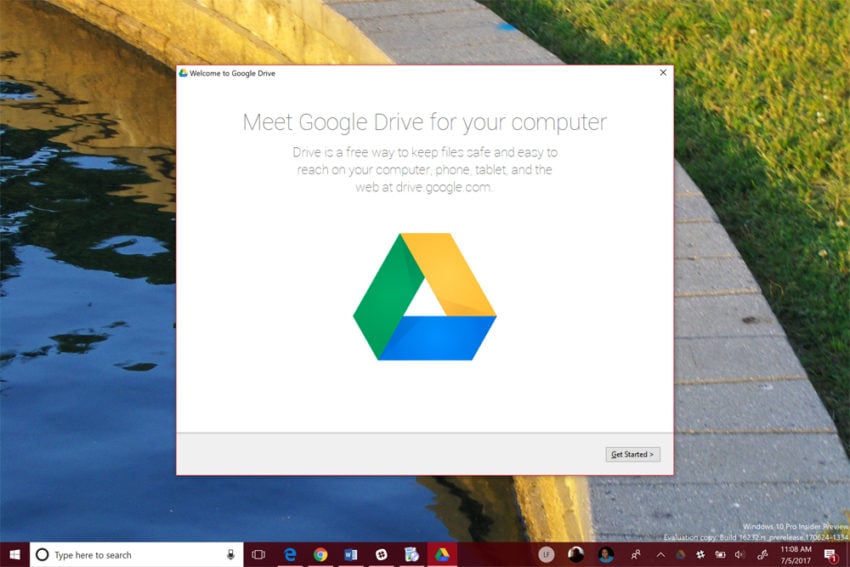
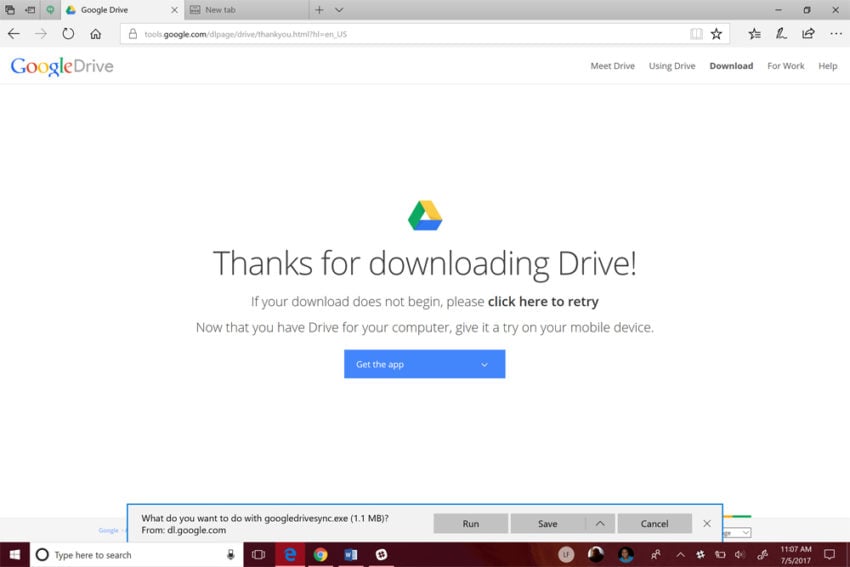 Wait for the installation to finish. Tap or click on the Get Started button.
 Sign in with the same Google Account username and password that you used for your Android smartphone. You will not see your existing files if this account doesn’t match your phone’s account.
 This screen explains how to add files from your Windows 10 PC to the service. Click Next.
 There are Google Drive apps for iPhones and iPads, too. Use this opportunity to install the app on any other devices you have. Now, click Next.
 This screen shows you how to right-click and share files with other people. Click Next.
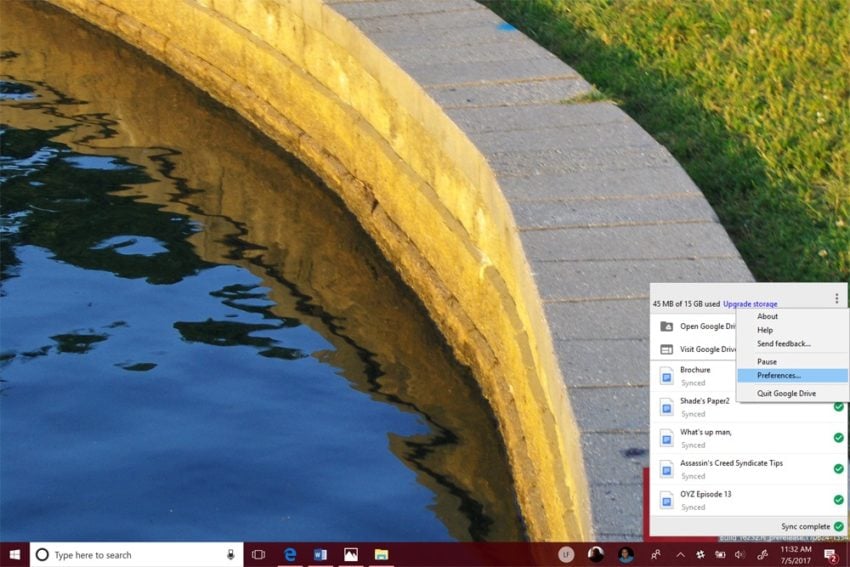
 Now, click Done. Your Windows 10 PC should have a Google Drive button in the taskbar. Clicking on this button reveals how much storage you have left and the files that Drive last synced.
 Syncing files is easy. Drop a file into the Drive folder on your Desktop to sync it. The file will surface on Google’s servers before showing up on your smartphone or tablet. This also works in reverse. Adding a file to the service from your smartphone syncs that file to your Windows 10 PC. Click on the three dots at the top of the pop-up window, and select Preferences to tune how the service syncs files to your Windows 10 PC.
 Sync everything to make sure you are never without the files you need. The more files you add to Drive, the more space your PC’s Drive folder will take up. Selectively syncing your files saves you storage space. However, it can leave you without an important file when you have no internet access.

Google Drive Apps for Windows 10
There are unofficial apps that you can download from the Windows Store to interact with Google Drive. These apps let you move, open and interact with your files without storing them on your PC. Each app also has a touch-friendly interface. You can install these apps and manage your storage with Windows 10 S. That’s the version of Windows that blocks users from installing the official program from the web.

Touch Client for Drive.
- Metro Drive is free. You can move files and edit any documents you leave on Drive.
- Touch Client for Google Drive lets you see what’s stored on Google’s servers. You can tell it which files you’d like to keep on your Windows 10 PC. It costs $4.99 from the Windows Store.
Google Drive Storage Plans
The more stuff you add to Google Drive, the more storage you need. Every user gets 15GB of storage to start. You’ll need more than that to keep years of photos and video clips safe.
The first two plans are for beginners. You can pre-pay for one year of storage, or pay once a month and cancel these plans when you need to. 100GB of storage is $1.99 a month or $19.99 a year. The service’s 1TB storage option costs $9.99 a month or $99 a year.
Google’s other three plans only offer monthly payment options. There’s 10TB of storage for $99 a month, 20TB of storage for $199.99 a month and 30TB of storage for $299.99 a month. These are for users with a huge photo and home video collection only.
Check your available storage anytime from the Google Drive button in your taskbar. Head there to purchase a storage plan, too.
What Is Google Drive?

Google Drive is Google’s cloud service that enables you to store and synchronize your files for easy backup and access from multiple devices, such as your desktop computer, your smartphone, and your tablet. You can also use Google Drive to collaborate with others, sharing documents and allowing others to edit them in real time.
Get started with Google Drive
To begin using Google Drive, you need to set up a Google Drive account at drive.google.com.
- Click Create an Account.
- Fill in your information and click Next Step (see Figure 1).
- Decide whether to create a Google+ profile. If you don’t want to, click No Thanks.
- On the Welcome screen, click Back to Google Docs, which takes you to your Google Drive.

Figure 1: Fill in your information to set up your Google account.
The account you just set up enables you to access all of Google other applications, such as Gmail, YouTube, Google Maps, and Google Calendar.
What can you do with Google Drive?
The benefits you get from Google Drive depend on how extensively you use it. You can use Google Drive simply to back up your files. Your free account comes with 15GB of free storage, and you have the option to buy more storage for a few bucks per month. Just upload your files from your desktop computer to your Drive for safekeeping. Or download the Google Drive application to automatically synchronize your files to your Drive.
You can take it a bit farther by downloading the Google Drive app to your smartphone or tablet. The app enables you to view, share, and print your documents from anywhere you take your device. You can also scan documents with your phone or tablet’s camera and upload them to your Drive.
But Google Drive isn’t meant just for storage. To get the most of your Drive, you can use it as a productivity tool, such as a word processor, a spreadsheet program, a slideshow program, and even a drawing program. This is great if you don’t want to shell out the money for software, because these Google apps are free and have the basic functionality that most people need. The documents you create are stored on your Google Drive, which you can view from your computer or other devices.
Collaborate with Google Drive
If you want to get really fancy in using Google Drive, you can use it to collaborate with others. For example, say that you’re creating a document that needs input from several different colleagues. You don’t have to e-mail that document around for updates and then try to make sure you’re using the most up-to-date version. You simply start your new document on your Drive and then share it with your colleagues. Depending on the permissions you set up, your colleagues can either view the document only or edit the document. There is only one document, but many people can make changes to it (even at the same time).
Try this: Say you’re meeting with colleagues and brainstorming ideas for something new. Open a Google Drive document (a word processing document or spreadsheet) and share it with the others. Use the document as a virtual whiteboard to take notes of your brainstorming session. Or allow the others to update the document with their own ideas in real time, which everyone else in the meeting can see. This can be especially handy if your colleagues are in different locations.
Keep in mind that when you share a document on Google Drive, those you share it with can see any and all changes you make, and if you give them permission, they can change the document as well. So make sure you’re giving permission to people you trust!
About This Article
This article can be found in the category:
How to Use Google Drive — Tutorial and Best Practices
Google Drive is a popular tool for document management. This step-by-step tutorial shows you the best way to set it up and get started.
December 04 2020

In the first quarter of 2020, Google Workspace (formerly known as G Suite) hit a staggering 2 billion users. While over 1.5 billion users mainly use the service for free email account access through Gmail, many users appreciate the wide selection of integrated apps.
However, it’s easy to focus on the apps for editing — such as Docs, Sheets, and Slides — and forget the powerhouse behind them: Google Drive.
What Is Google Drive?
Google Drive is a storage service that functions as a cloud-based external harddrive. You can easily store, manage, and share content such as documents, images, and audio files.
Upload and download files as you need them, organize them in intuitive folder structures, and share them with the right people.
Google Drive’s intuitive interface and integration with other Google apps have made it convenient for private use as well as small- and medium-sized businesses and startups.
Using Google Drive for Knowledge Management
Not having a proper knowledge management strategy can waste employees’ time as well as creates additional work and jeopardizes crucial company information. Google Drive can be the first step in the right direction of ensuring that organizational knowledge is properly stored and shared. Gathering content in one place helps improve the issue with information silos, where important documents and content become stuck on hard drives or in someone’s email inbox.
So, how can a business use Google Drive? Common ways of using it include:
- Storing reports and policy documents
- Sharing media assets, such as photos, logos, and press releases
- Gathering images and other media files to keep handy in the workflow
 Google Drive Features
Google Drive comes with a long list of impressive features, including:
- 15 GB of free storage.
- Ability to store various file types and file extensions, such as documents, photos, audio and video files, and more.
- Intuitive folder structures for organizing content.
- Attachment-saving straight to Drive from Gmail.
- Well-functioning integration with other Google Workspace tools.
- User access management with folders or links.
- Secure login, including the option of two-factor authentication.
- Integration with apps outside the G Suite for increased functionality.
- Compatibility with Microsoft Office-files.
- Options for offline access.
Google Drive Benefits
The Google Drive benefits will depend on how and why you use it, but a few popular advantages include:
- Free to use, and starting at $6 per user per month for the paid Google Workspace-versions.
- Get started in minutes — Drive doesn’t require a lot of technical skills or any installations.
- Work with a clean, intuitive interface that is easy to navigate.
- Access files anywhere and from any device.
- Edit and manage user access to files and folders.
- Potential Drawbacks of Google Drive
- While there are plenty of Google Drive benefits, we also see some potential downsides, such as:
- Customization and functionality are limited compared to other alternatives.
- Content editing requires changing to using Docs, Sheets, Slides, etc.
- Folder structures can become challenging to overview.
- External integration options are limited.
How to Use Google Drive [Step-By-Step Tutorial]
If you are interested in using this tool, let this Google Drive tutorial guide you through best practice for setting it up:
1. Set Up a Google Account

Do you have a Gmail-address, use Google Mail, or work with any of Google’s other products? Then you’ve already got Google Drive access. If not, start by signing up.
For the free version, sign up for Gmail. Many businesses will opt for accessing Google Drive through the paid, more advanced Google Workspace.
2. Discover My Drive

The default homepage of Google Drive is My Drive. You can also navigate to it through the left-hand sidebar.
My Drive is where you’ll find all your Google files, complete with quick access to recent files and an overview of your folders. So, even if you’ve never used Drive before, you’ll find it full of files if you’re already a user of Google Docs, Sheets, or other Google apps.
3. Get Familiar With the New-Button

One of the most crucial buttons for using Google Drive is the button with the plus icon, named New. Click this button to create new folders, upload files or folders, or create a new file in other Google apps such as Docs and Sheets.

You can also connect even more of Google’s apps through Google Workspace’s marketplace.
4. Set Up Your Folder Structure

Although Drive has a search function, we highly recommend setting up a folder structure. Folders allow you to quickly group and navigate to the right files. Grouping files into folders also makes it easier to share several files with other people.
Create a new folder by clicking the New button in the sidebar, and then add and name as many folders as you need. Drag and drop folders in each other to create a nested folder structure.
When creating folders, it’s a good idea to consider how you use your files. For example, do you often share marketing reports with your team? Then it could make sense to place all of them together in a folder and share the entire folder instead of sharing the files one by one.
5. Access Files From Others

By clicking Shared with me in the left sidebar, you’ll get an overview of files and folders that others have shared with you. The quick view shows you the latest documents from each person who has shared the files with you.
6. Manage Your Google Drive Files

When you right-click a file, you’ll be presented with a list of options. For example, you can see the file’s location, download it, or share it.
Once you’ve got your folder structure in place, start organizing files into folders by right-clicking and choosing the right folder. Alternatively, you can drag them straight to the preferred folder. You can also move the file to a folder when using the file in another app, such as Google Docs or Sheets.
Do you need to clean up the Drive? If you right-click on a file, you can choose to trash it — but remember that this also removes the file from the corresponding tool, such as Google Docs.
Right-clicking also gives you the option Adding as starred, which adds the file to the label with the same name in the left sidebar.
7. Explore Priority Navigation

At the top of the left sidebar, you’ll find Priority. Priority lets you immediately see your favorite files. Here, Google Drive highlights files based on your recent work. To speed up navigation further, you can turn Priority into your Drive homepage.
Priority also features space for Workspaces. A workspace holds up to 25 files (for the basic Google Workspace-version). A workspace is another way to quickly group and access the files you work on the most, for example, crucial files related to one specific project.
8. Share Files and Folders With the Right People
Finally, we’ve come to one of the most important aspects of Google Drive — sharing your files with other people.
The process for sharing files and folders is the same. You right-click it and then choose if you want to add emails to grant access to the recipients or if you want to share a link. When creating a sharable link, you can decide if the file or folder only can be accessed by email addresses from the same group (e.g., your company’s Google account) or if you want anyone with the link to get access.
You can also decide how others can interact with a file. Are they invited as viewers, commenters, or as fellow editors?
9. Search For the Right File
Hopefully, you’ll follow the earlier suggestions and set up a set of folders for your content. But, sometimes, it can still be hard to find the right file. The easiest way to solve this is to use the built-in search bar and add suitable keywords.
10. Using Google Drive Offline
You can access files offline when using Chrome as a browser. To save files for offline use, choose the cogwheel and then Settings. The settings give you the option to make Google Docs, Sheets, and Slides available even when you do not have an internet connection.
Making files available in offline mode means storing a local copy on your device until it is synced with the cloud, so do not do this on public or shared computers.
10. Explore Other Ways to Access Google Drive
You can also access Google Drive on mobile phones through apps from the App Store and Google Play.
Is Google Drive the Right Option For You?
In this guide, we’ve taken a look at what Google Drive is and how to use it. But, before you follow this Google Drive tutorial to set it up, let’s take a moment to consider whether it is the right option for you and your business.
Google Drive is useful for quickly setting up a document hub and sharing content. While it comes with a free version through Gmail, the paid version through Google Workshop is good value for money as you access a host of useful tools.
Using Google Drive is a far better option than storing information on physical hard drives or emailing new document versions back and forth.
However, using Google Drive for knowledge management comes with a set of limitations. It simply lacks the advanced features and integrations with other apps that would make it useful for ambitious businesses.
The right knowledge base would serve an ambitious business better, as it has more powerful features and advanced customization options.
Just like Google Drive, a knowledge base lets you store and share information. But, here you can edit the contents, too — without changing to Google Docs or Sheets.
- A knowledge base is an all-in-one tool with essential features such as:
- Powerful, easy-to-use search.
- Intuitive content structure and overview.
- Editing and commenting options for real-time document collaboration.
- Analytics that shows how users interact with content.
- Advanced access and security functions with more comprehensive customization.
- Crucial integrations with products beyond Google’s options.
- Rich customization options.
The Helpjuice knowledge base has all of the above — and so much more. But, the big difference between our knowledge base and Google Drive is that we’re big on customization.
Instead of you having to adapt to the tool, we want the tool to adapt to you. That’s why our knowledge base comes with unlimited customization options. Our support team will even help you tailor the knowledge base so it fits your business needs perfectly. Try out Helpjuice for free for 14 days now.
More Blog Posts
Enjoyed this article? Check out our favorites